In focus: Vogue — August 31, 1918
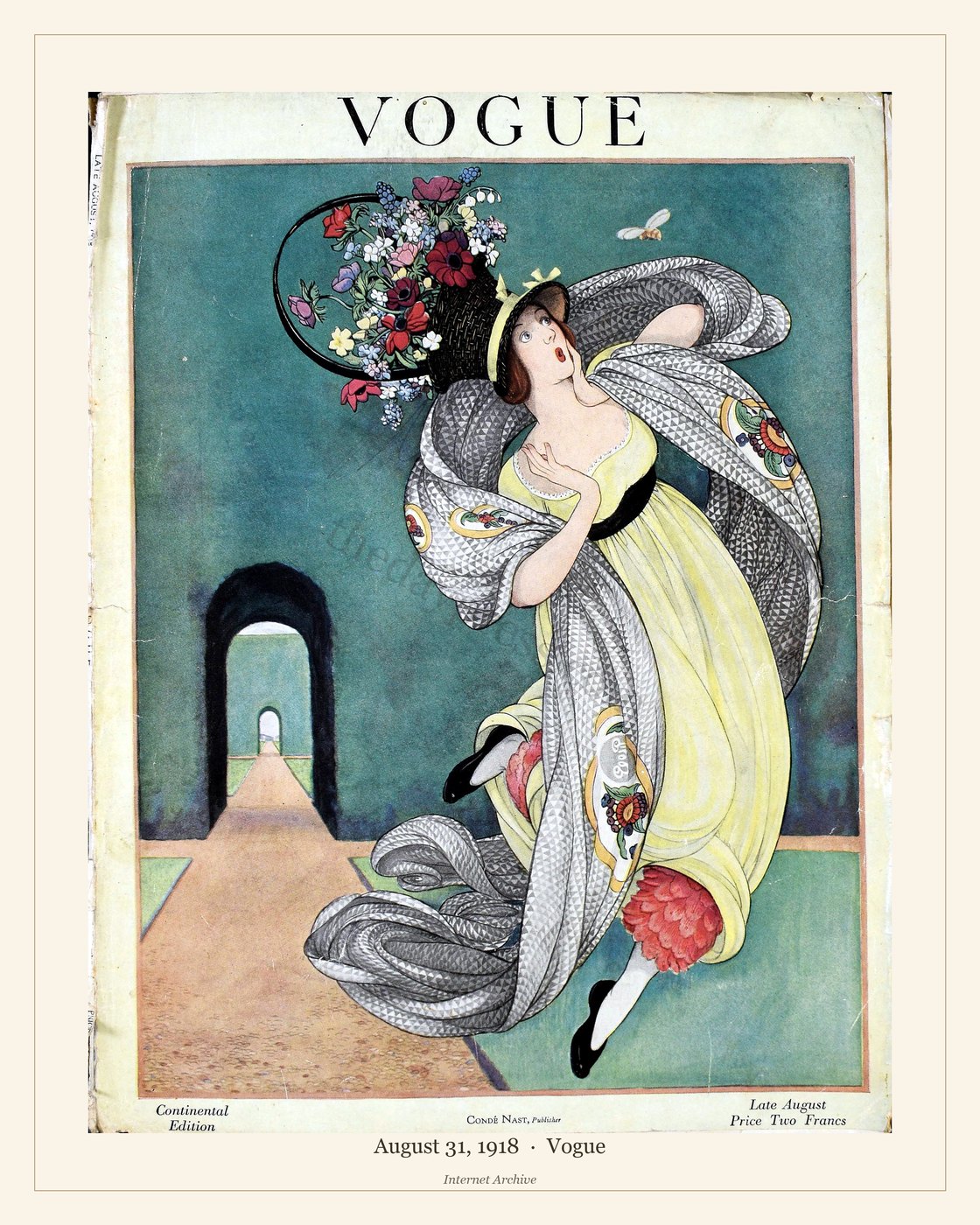
TL;DR — The Vogue issue dated August 31, 1918 is an autumn-forecast number from the final autumn of the First World War. Its date is a good occasion to trace where Vogue’s distinctive cover style actually came from — not from the old fashion plate, but from the theatrical poster, the colour revolution of the Ballets Russes, and the flat design of Japanese prints and Art Nouveau. This piece follows that lineage, which is what makes these covers read as modern graphic art, and places the issue in the war’s last autumn.
By The Day Press · Published August 2026
Not a fashion plate: where the Vogue cover came from
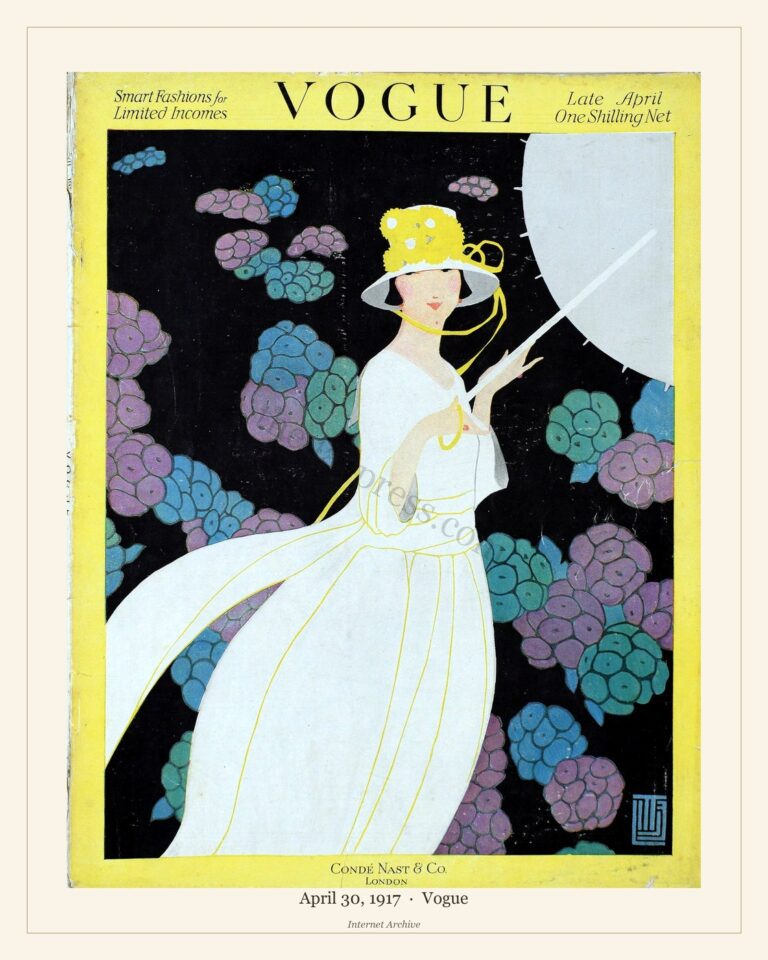
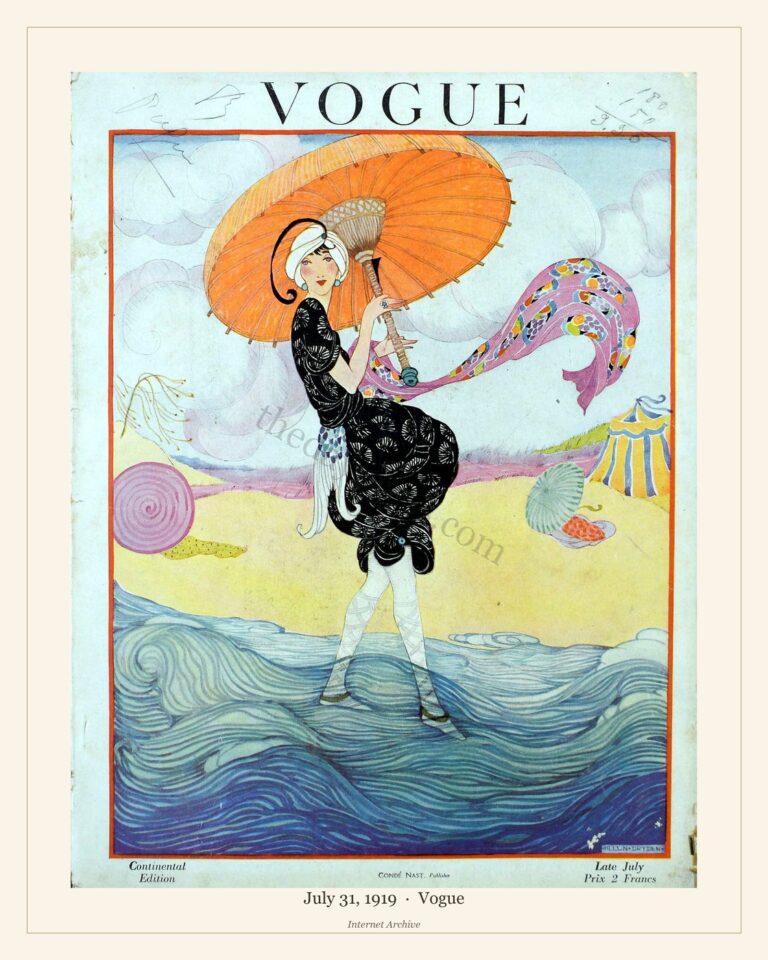
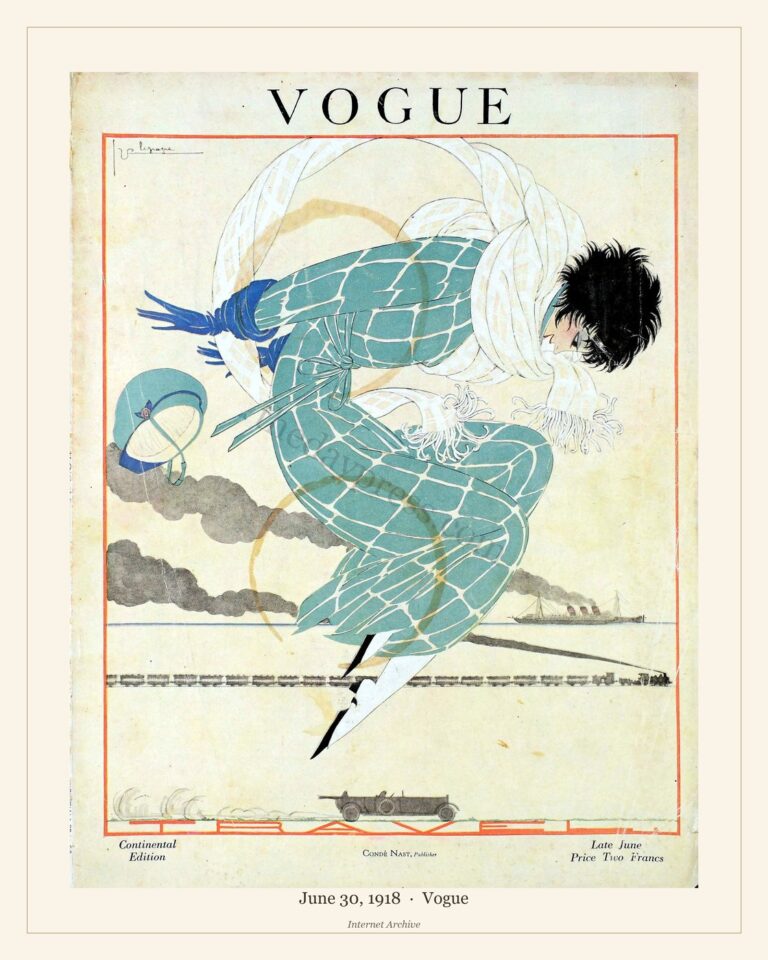
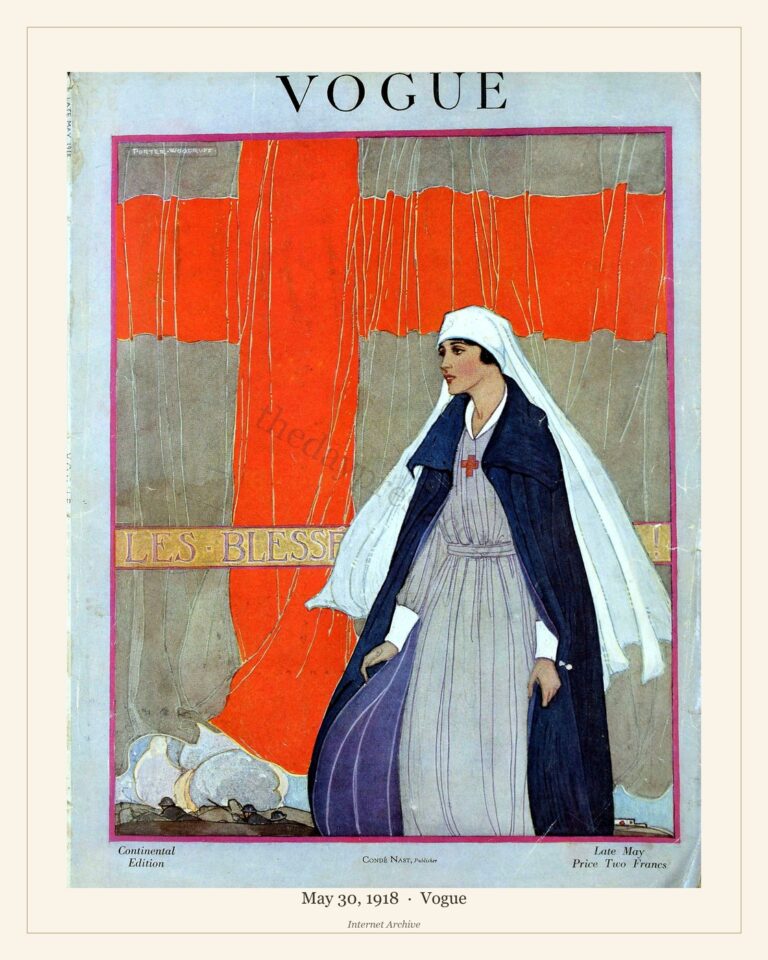
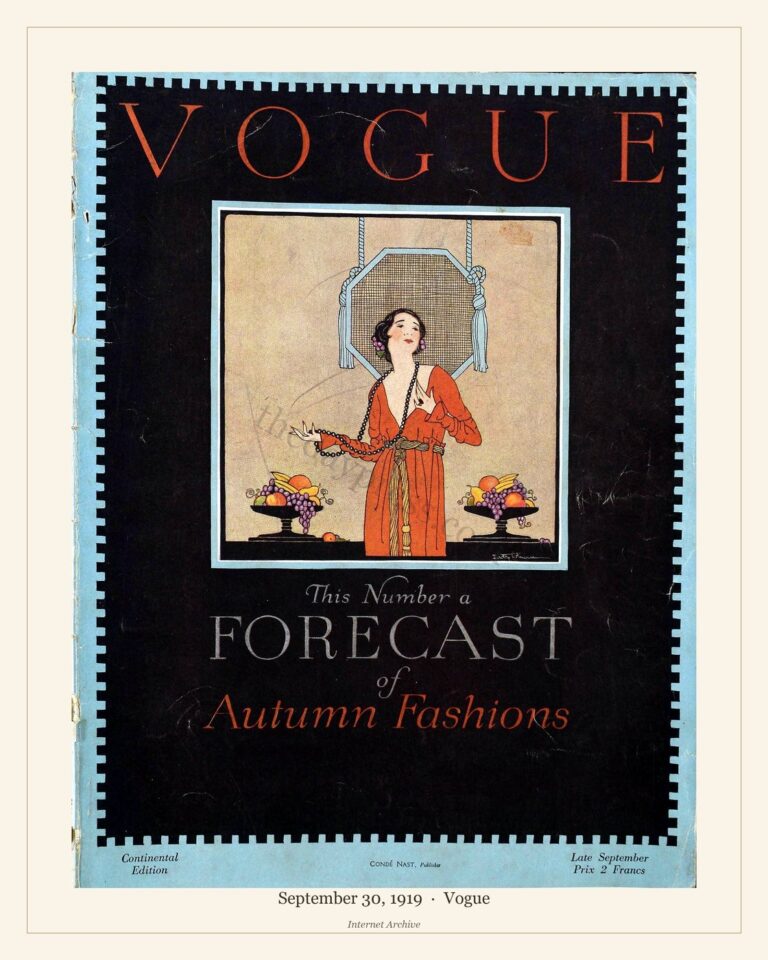
It is easy to assume the illustrated Vogue cover descended from the fashion plate — the careful, literal costume illustrations of the nineteenth century. It did not, or not mainly. The Vogue cover’s real ancestry is in the graphic revolution of the 1890s and 1900s: the artistic poster, Art Nouveau, the flat colour and cropped composition of the Japanese woodblock print that had reshaped European art, and above all the explosive colour of the Ballets Russes.
When Serge Diaghilev’s Ballets Russes arrived in Paris in 1909, its designer Léon Bakst put saturated, ‘oriental’ colour and bold pattern on the stage in a way that stunned the fashion and art worlds. The couturier Paul Poiret rode the same wave into fashion; illustrators absorbed it into commercial art. Vogue’s covers — flat, decorative, built from strong areas of colour — are downstream of that moment.
Why the lineage matters
This ancestry is exactly what makes a Vogue cover of this period read as art rather than as costume reference. A fashion plate shows you a dress; a Vogue cover shows you a designed image — mood, modernity, and style compressed into a poster-like whole. The figure is an emblem, the colour is expressive, the composition is graphic. These are the concerns of modern design, not of dressmaking documentation.
It also explains why the covers have outlived their moment. They belong to the same story as the modern poster and the birth of graphic design, which is why museums and design historians collect them and why an original, framed, holds a wall as a piece of art.
The war’s last autumn
The issue is dated to the end of August 1918, opening the autumn forecast in the war’s final autumn; the Armistice came ten weeks later, on November 11. Vogue kept to its seasonal calendar throughout, the autumn number appearing on schedule even as the war reached its climax.
The cover, as always, is an idea of the season rendered in the magazine’s graphic house style — not a record of a specific garment — which is why it survives as an image today.
Japonisme and the flat image
One current in that graphic revolution deserves singling out: the influence of the Japanese woodblock print. After Japan reopened to trade in the mid-nineteenth century, its prints flooded into Europe and transformed Western art — the Impressionists, Whistler, Toulouse-Lautrec’s posters, and the whole Art Nouveau movement absorbed their lessons. The phenomenon even acquired a name: Japonisme.
What Western artists took from the Japanese print was a new grammar of the flat image: broad areas of unmodelled colour, bold cropping, asymmetry, expressive empty space, and outline in place of shading. This is precisely the grammar of the Vogue cover — flat, cropped, decorative, graphic — and it is a large part of why these covers read as modern design rather than as illustration in the older, deep-space European tradition.
A dated cover from the illustrated era
Vogue’s drawn covers form a finite body of work, roughly 1909 to 1931, closed by the photographic cover of 1932. Dated to the autumn of 1918, this one sits within the tradition that carried the graphic revolution of the 1900s onto the American newsstand.
The Vogue covers in our archive belong to this graphic tradition, each dated to the real issue it appeared on. Browse the Vogue covers →
Frequently asked questions
Did Vogue covers descend from the fashion plate?
Not mainly. Their real ancestry is the graphic revolution of the 1890s–1900s: the artistic poster, Art Nouveau, Japanese woodblock prints, and the colour of the Ballets Russes — which is why they read as modern design rather than costume illustration.
What was the Ballets Russes’ influence?
Serge Diaghilev’s company, with Léon Bakst’s saturated colour and bold pattern, transformed European ideas of colour and design from 1909 and fed directly into fashion (via Poiret) and illustration (via Vogue’s covers).
Why are these covers considered art?
Because they belong to the history of the modern poster and graphic design — designed, expressive images — rather than to costume documentation.
Is the cover a drawing?
Yes — every Vogue cover from 1909 to 1932 was illustrated, not photographed.
Further reading
- Browse Vogue covers
- Browse magazine cover art
- Nancy J. Troy, Couture Culture: A Study in Modern Art and Fashion (MIT Press, 2003).
- William Packer, The Art of Vogue Covers 1909–1940 (Bonanza Books, 1980).
The Day Press curates, restores, and reformats public-domain American printed images from 1885 to 1928 for archival-quality home printing. Browse the archive · Browse by theme, month, decade.