In focus: Vogue — May 30, 1918
TL;DR — The Vogue issue dated May 30, 1918 is an early-summer number from the last spring of the First World War, and it belongs to the moment when ‘fashions for limited incomes’ had become a recurring Vogue theme. Its date is a good occasion to examine how the war reshaped fashion itself — shorter skirts, less fabric, practical dress for women entering war work, and the rise of simpler materials — and how a luxury magazine reported all of it. This piece covers the wartime transformation of dress, Vogue’s response, and the illustrated cover.
By The Day Press · Published July 2026
How the war changed what women wore
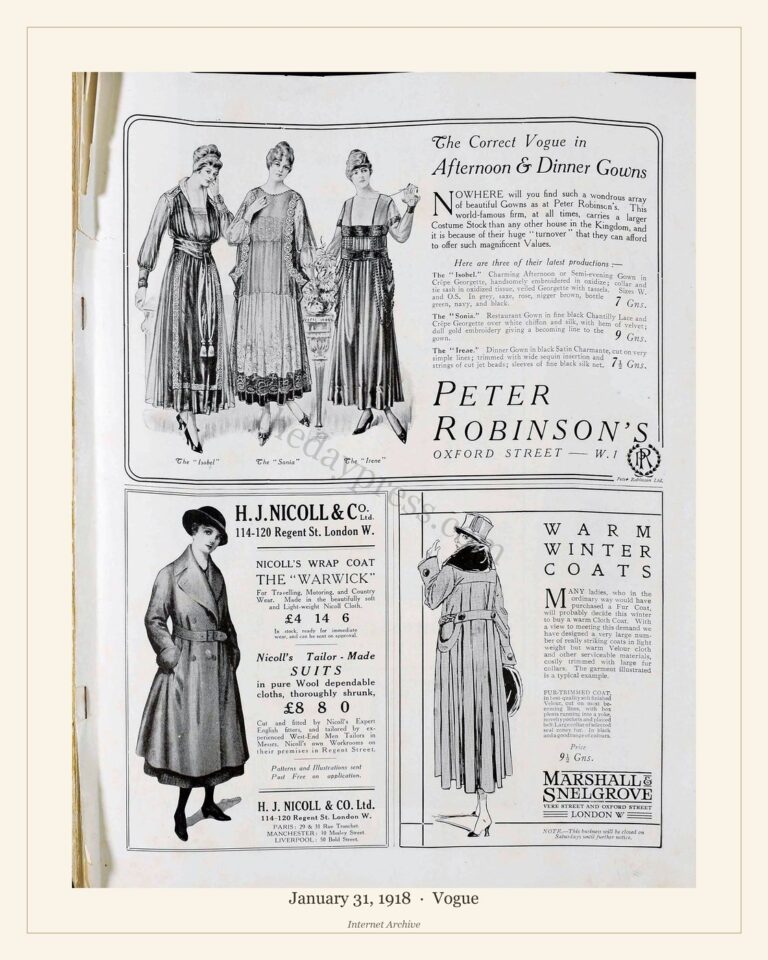
The First World War altered women’s clothing more sharply than any single event of the era. With millions of men at the front, women moved into factory work, offices, transport, and nursing, and their clothes had to follow: skirts rose off the ground, silhouettes loosened and simplified, elaborate trimming fell away, and practical, hard-wearing garments gained a legitimacy they had never had in polite fashion.
Fabric itself was constrained. Wool and other materials were needed for uniforms, and thrift became both a practical necessity and a patriotic duty. Designers responded: this is the period in which Coco Chanel’s use of humble jersey — previously a fabric for underwear — for simple, easy garments began the long move toward the relaxed modern silhouette that would define the 1920s.
‘Fashions for limited incomes’
Vogue, a magazine built on luxury and an affluent readership, had to reckon with all this, and by 1918 it did so openly. ‘Fashions for limited incomes’ had become a recurring theme — the magazine offering simpler, thriftier, more economical dress alongside its couture coverage. It promoted the remaking of existing clothes, home sewing through its pattern business, and a wartime aesthetic of restraint.
This was not a retreat from fashion but a redefinition of it, and in hindsight it pointed forward. The wartime values of simplicity, practicality, and economy that Vogue was reluctantly reporting in 1918 became, within a few years, the actual direction of fashion — the war did much to make the streamlined 1920s possible.
The illustrated cover
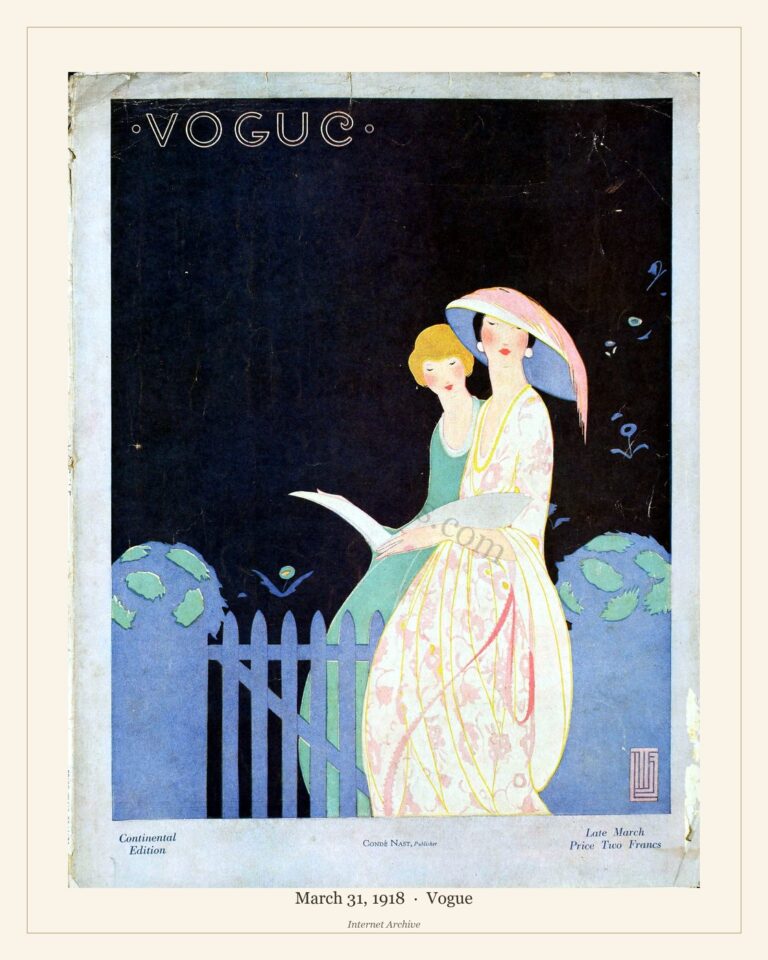
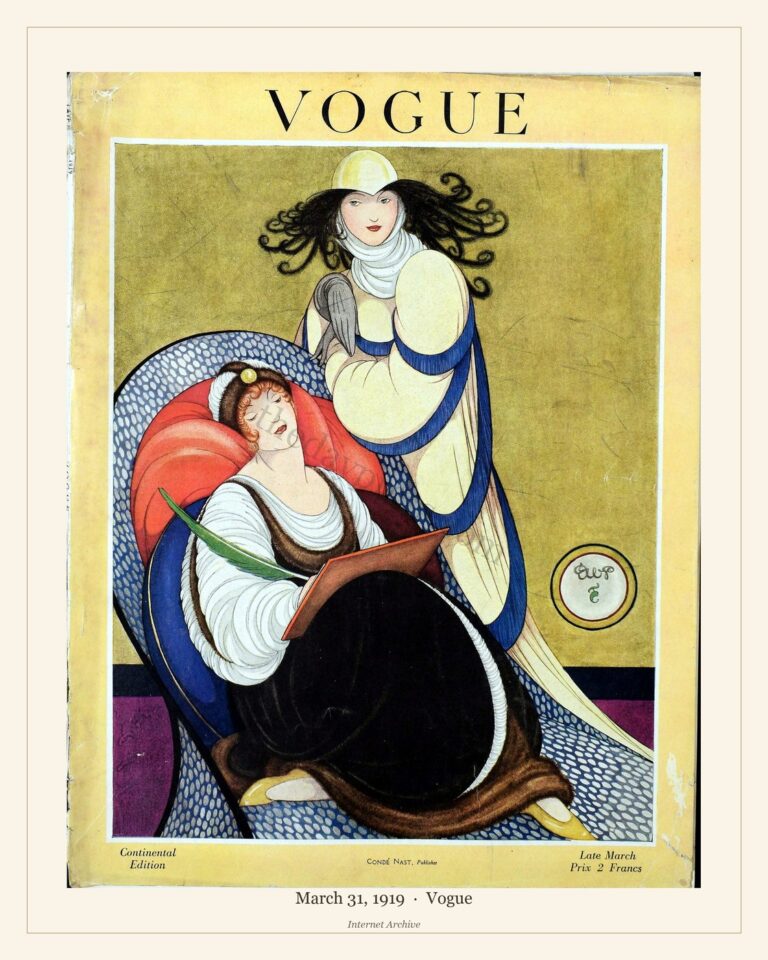
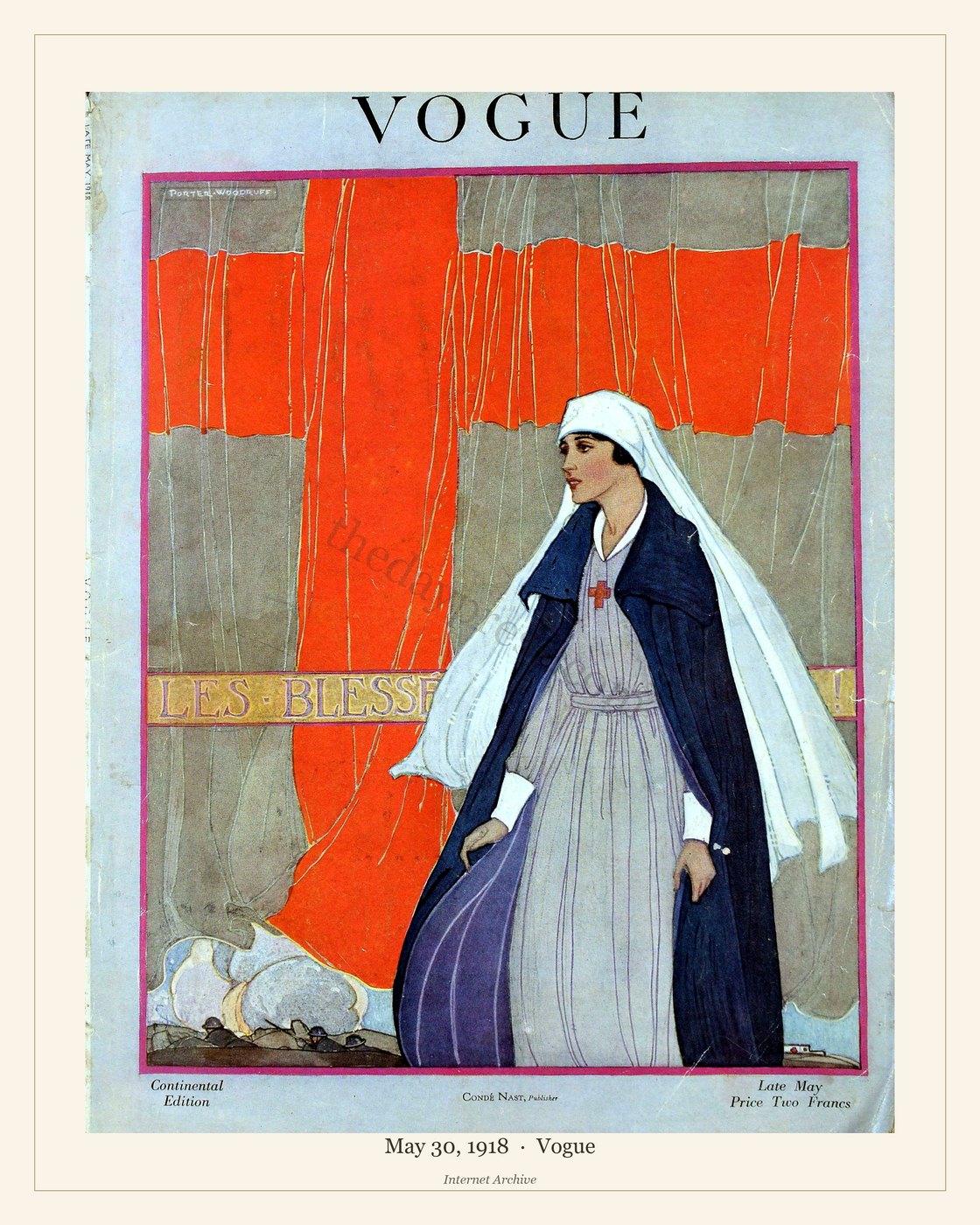
The cover of this early-summer issue, like every Vogue cover from 1909 to 1932, was a commissioned illustration rather than a photograph. Vogue’s summer numbers covered resort and warm-weather dress, and the covers — by the magazine’s regular artists — conveyed the season as mood and idea. Even as the editorial pages preached thrift, the cover kept its role as the magazine’s most seductive image.
How wartime dress left a permanent mark
The practical turn in wartime dress did not vanish with the peace; some of it became permanent. The clearest example is the trench coat, a waterproofed coat developed for British officers in the trenches by firms such as Burberry and Aquascutum, which passed after the war straight into civilian wardrobes and has never left — a piece of military necessity that became a century-long fashion staple.
The pattern was broader. Functional pockets, freedom of movement, and the basic legitimacy of practical working dress for women all gained ground in the war and stayed. A Vogue of 1918 sits at the moment these wartime innovations were passing from necessity into style — the beginning of the modern, functional wardrobe.
A dated cover from the illustrated era
Vogue’s drawn covers form a finite body of work, roughly 1909 to 1931, ended by the photographic cover of 1932. Dated to late spring 1918, this one comes from the war’s final months — the moment fashion’s wartime transformation was setting the stage for the 1920s.
The Vogue covers in our archive are drawn from this illustrated era, each dated to the real issue it appeared on. Browse the Vogue covers →
Frequently asked questions
How did the First World War change women’s fashion?
It raised skirts, simplified silhouettes, cut back trimming and fabric use, and legitimised practical dress for women entering war work — changes that helped make the streamlined 1920s silhouette possible.
What were ‘fashions for limited incomes’?
A recurring Vogue theme by 1918: simpler, thriftier dress — remaking clothes, home sewing, economical styles — presented alongside the magazine’s usual couture coverage in response to wartime economy.
Where does Chanel’s jersey fit in?
Coco Chanel’s wartime use of humble jersey fabric for simple, easy garments was part of the broader move toward practical, relaxed dress that the war accelerated.
Is the cover illustrated?
Yes — every Vogue cover from 1909 to 1932 was drawn or painted, not photographed.
Further reading
- Browse Vogue covers
- Browse magazine cover art
- Norberto Angeletti and Alberto Oliva, In Vogue: The Illustrated History of the World’s Most Famous Fashion Magazine (Rizzoli, 2006).
- Nina Edwards, Dressed for War: Uniform, Civilian Clothing and Trappings, 1914 to 1918 (I.B. Tauris, 2014).
The Day Press curates, restores, and reformats public-domain American printed images from 1885 to 1928 for archival-quality home printing. Browse the archive · Browse by theme, month, decade.