In focus: Vogue — July 31, 1919
TL;DR — The Vogue issue dated July 31, 1919 is a midsummer number from the first peacetime summer after the First World War. Its date is a good occasion to trace the single biggest change in twentieth-century women’s dress — the collapse of the corseted, S-curved Edwardian silhouette and the rise of the loose, straight, boyish line of the 1920s — a transformation under way in exactly these post-war seasons and documented by Vogue from the front. This piece follows that shift and the illustrated cover that recorded it.
By The Day Press · Published September 2026
From the S-curve to the straight line
At the start of the century the fashionable silhouette was architectural. The Edwardian ‘S-curve’ — produced by a rigid corset that thrust the bust forward and the hips back — defined the Gibson Girl era, all curves, boning, and elaborate construction. A woman’s dress was a built structure that reshaped the body beneath it.
Over the following two decades that structure came apart. Paul Poiret had already, before the war, promoted a higher waist and looser line and claimed to have ‘freed’ women from the corset. The war accelerated everything: practical war work, fabric restrictions, and simpler dress pushed the silhouette toward ease. By 1919 the direction was unmistakable — waists dropping, skirts shortening, construction loosening — heading toward the straight, boyish, low-waisted line that would define the 1920s.
Why the change was so complete
The shift from the Edwardian silhouette to the 1920s line was not a normal seasonal turn; it was one of the sharpest breaks in the history of dress. It reflected a genuine social revolution — women’s entry into work and public life, the loosening of Victorian manners, the vote (which American women won in 1920), and a widespread post-war appetite for freedom and modernity. Clothes followed the change in women’s lives.
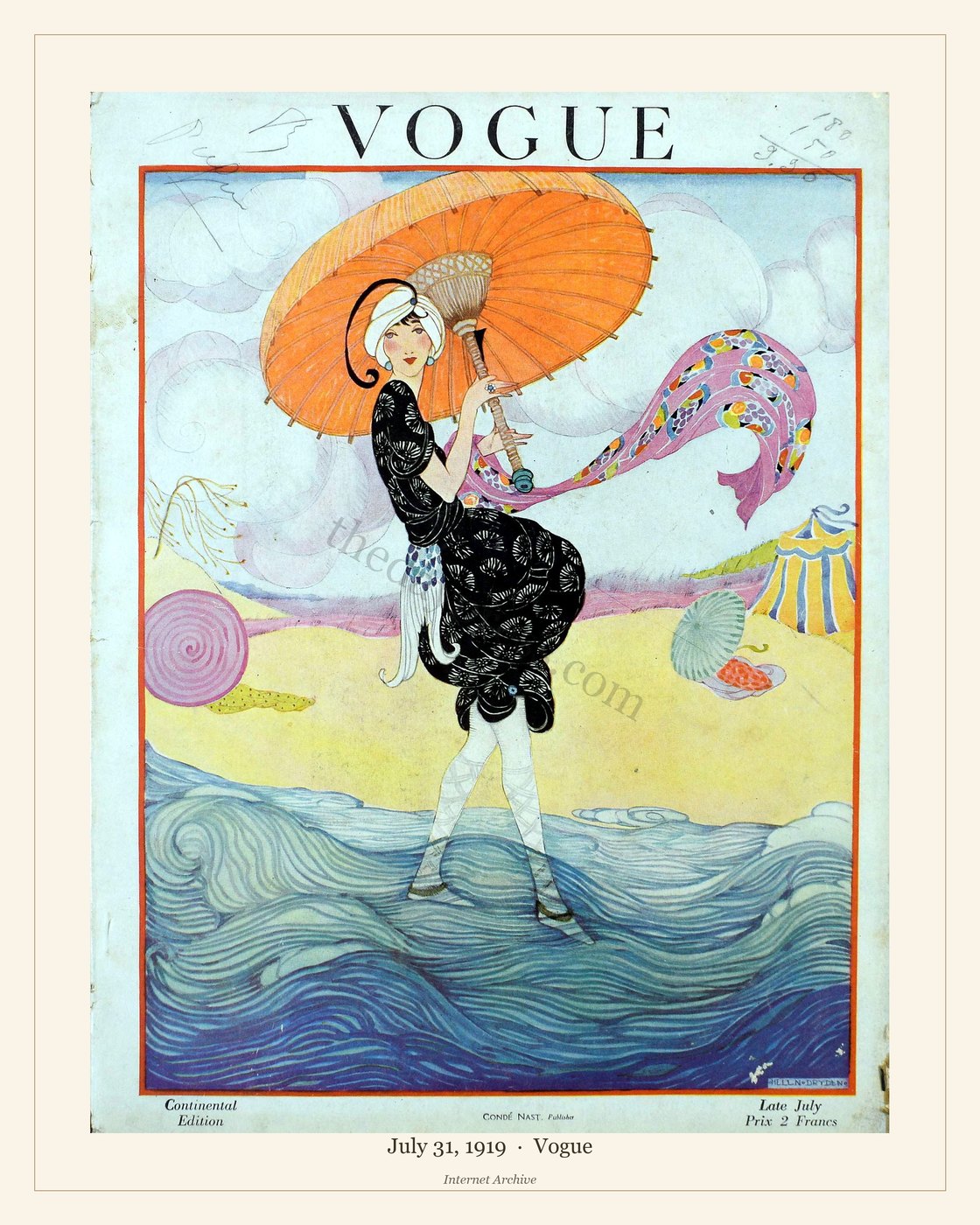
A midsummer 1919 cover sits in the middle of that transformation, at the moment the old silhouette was giving way and the new one had not yet fully arrived. It is a document of fashion in transition.
The illustrated cover
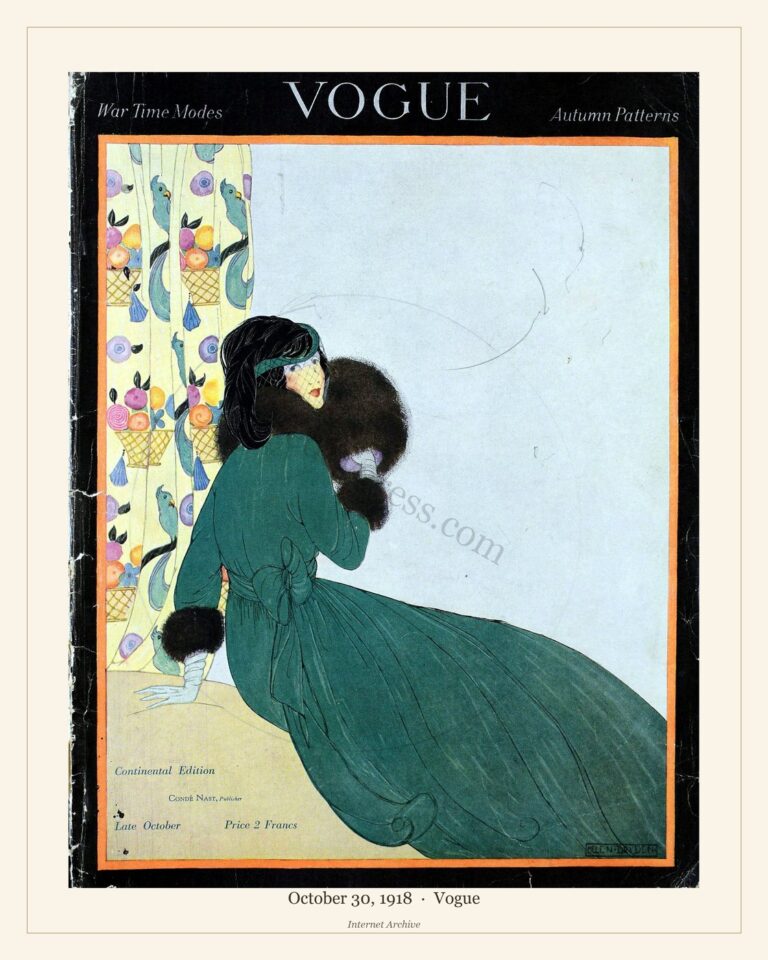
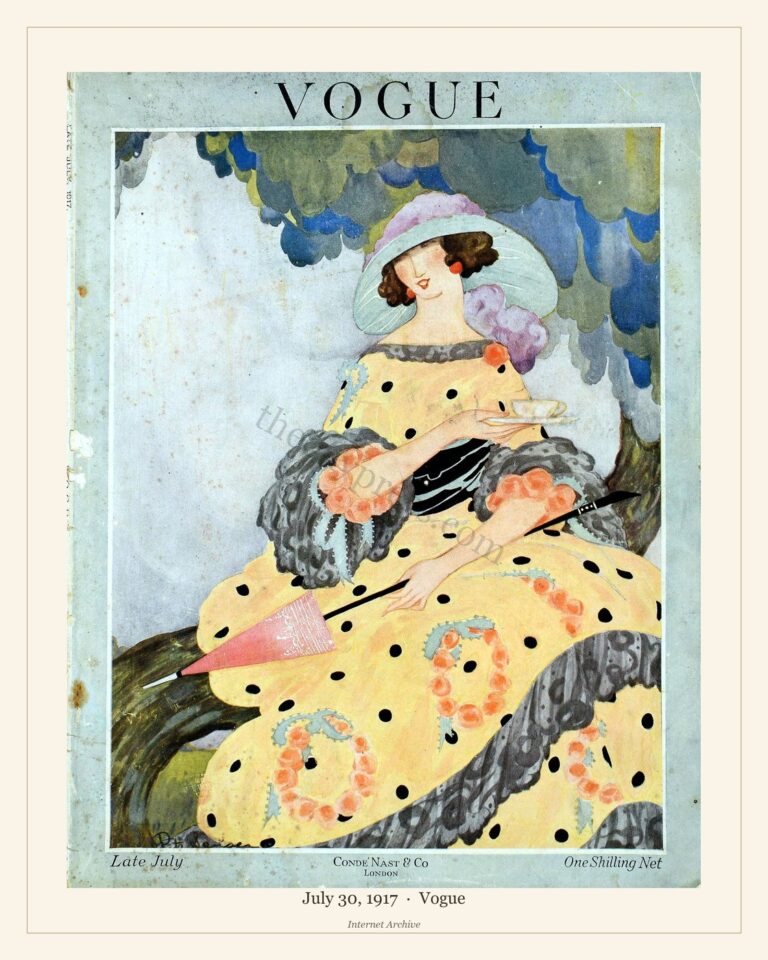
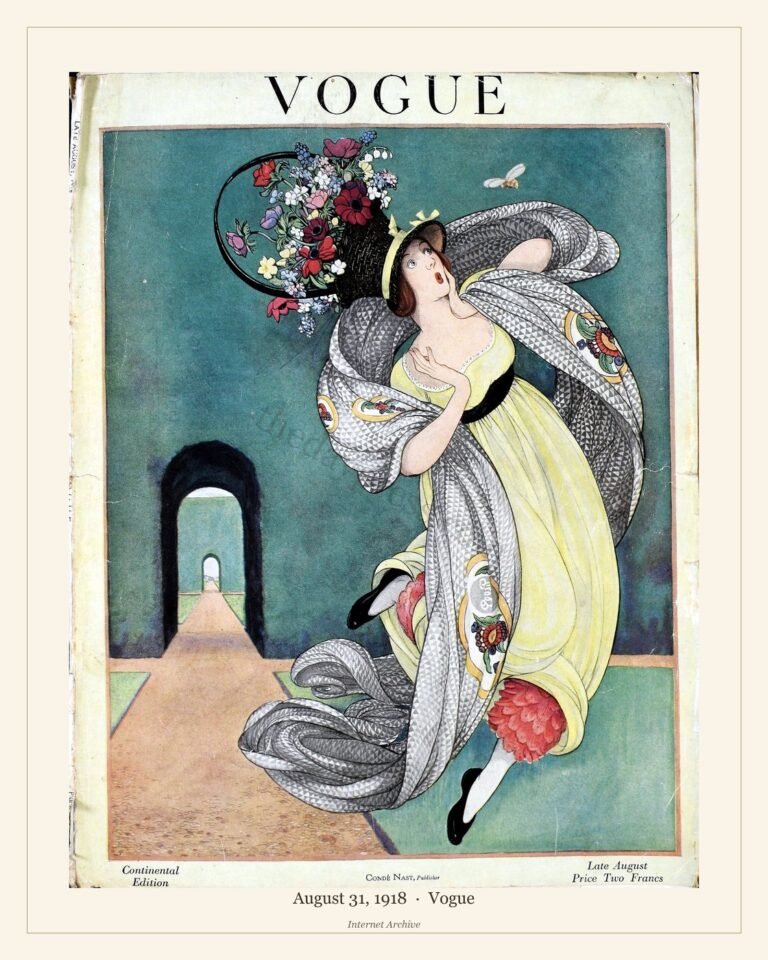
As with every Vogue cover from 1909 to 1932, the front of this issue was a commissioned drawing, not a photograph. Vogue’s hot-weather numbers covered summer and resort dress, and the covers — by the magazine’s regular artists — conveyed the season as mood and idea. Over the next few years these covers would themselves modernise sharply as Art Deco took hold, the graphic style keeping pace with the changing silhouette.
A dated cover from the illustrated era
Vogue’s drawn covers form a finite body of work, roughly 1909 to 1931, ended by the photographic cover of 1932. Dated to the summer of 1919, this one belongs to the pivotal seasons when the corseted Edwardian silhouette gave way to the modern line of the 1920s.
The Vogue covers in our archive span this transformation of the silhouette, each dated to the real issue it appeared on. Browse the Vogue covers →
Frequently asked questions
What was the Edwardian ‘S-curve’?
The fashionable early-1900s silhouette produced by a rigid corset that pushed the bust forward and hips back — the curved, constructed line of the Gibson Girl era.
How did it change by the 1920s?
It collapsed into a loose, straight, low-waisted, boyish line. The war accelerated a shift Poiret had begun, and by the early 1920s the corseted silhouette was gone.
Why was the change so dramatic?
It followed a real social revolution — women’s war work, the vote, looser manners, and a post-war appetite for freedom. Clothes changed because women’s lives did.
Is the cover a drawing?
Yes — every Vogue cover from 1909 to 1932 was illustrated, not photographed.
Further reading
- Browse Vogue covers
- Browse magazine cover art
- Valerie Steele, Paris Fashion: A Cultural History (Oxford University Press, 1988).
- Norberto Angeletti and Alberto Oliva, In Vogue: The Illustrated History of the World’s Most Famous Fashion Magazine (Rizzoli, 2006).
The Day Press curates, restores, and reformats public-domain American printed images from 1885 to 1928 for archival-quality home printing. Browse the archive · Browse by theme, month, decade.