In focus: Vogue — August 15, 1920
TL;DR — The Vogue issue dated August 15, 1920 appeared in the very week American women won the vote — Tennessee ratified the Nineteenth Amendment on August 18, 1920, making it law. Its date is a good occasion to connect two things that arrived together: women’s suffrage and the ‘New Woman’ of the 1920s as an independent public citizen and consumer, and the fashion revolution that dressed her. This piece sets the cover against the moment American women became voters, and the decade of freedom — and marketing — that followed.
By The Day Press · Published October 2026
The week American women won the vote
This issue is dated to within days of one of the pivotal moments in American history. On August 18, 1920, Tennessee became the thirty-sixth state to ratify the Nineteenth Amendment, providing the final vote needed to make it law; it was certified on August 26. After more than seventy years of campaigning, American women had won the vote nationwide.
That a Vogue — the magazine of fashionable women — is dated to this exact week is a coincidence of the calendar, but a resonant one. The enfranchised woman of 1920 was also the woman the whole consumer economy of the coming decade would be built to court.
The New Woman as citizen and consumer
The 1920s woman who emerged in these years was a genuinely new social figure: she could vote, she was more likely to work, she went out unchaperoned, she drove, she smoked in public, she spent her own money. Fashion registered the change immediately — the rising hemlines, the bob, the straight and unconstrained silhouette were the visible signs of it — and so did advertising and magazines, which increasingly addressed women as autonomous consumers making their own choices.
Vogue sat at the centre of this. Condé Nast’s whole business was built on reaching exactly this affluent, modern woman, and the magazine’s covers presented her ideal image: stylish, self-possessed, unmistakably of the new decade. The suffrage victory and the consumer culture that courted the New Woman are two faces of the same historical moment, and a Vogue dated to August 1920 sits precisely on it.
The illustrated cover, at the dawn of the Jazz Age
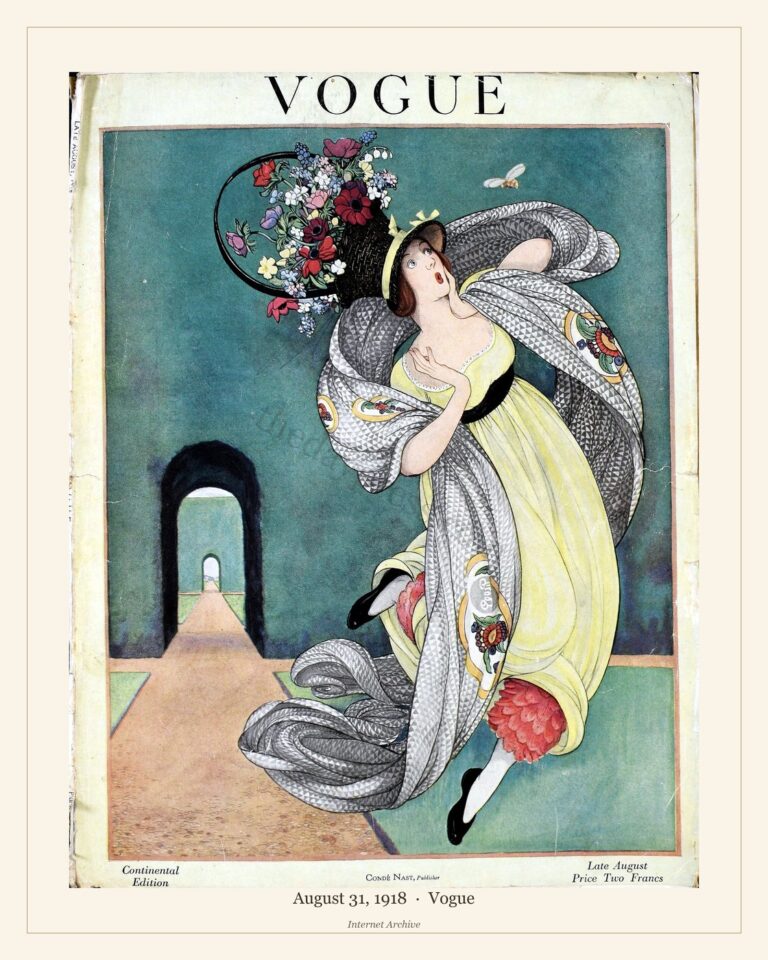
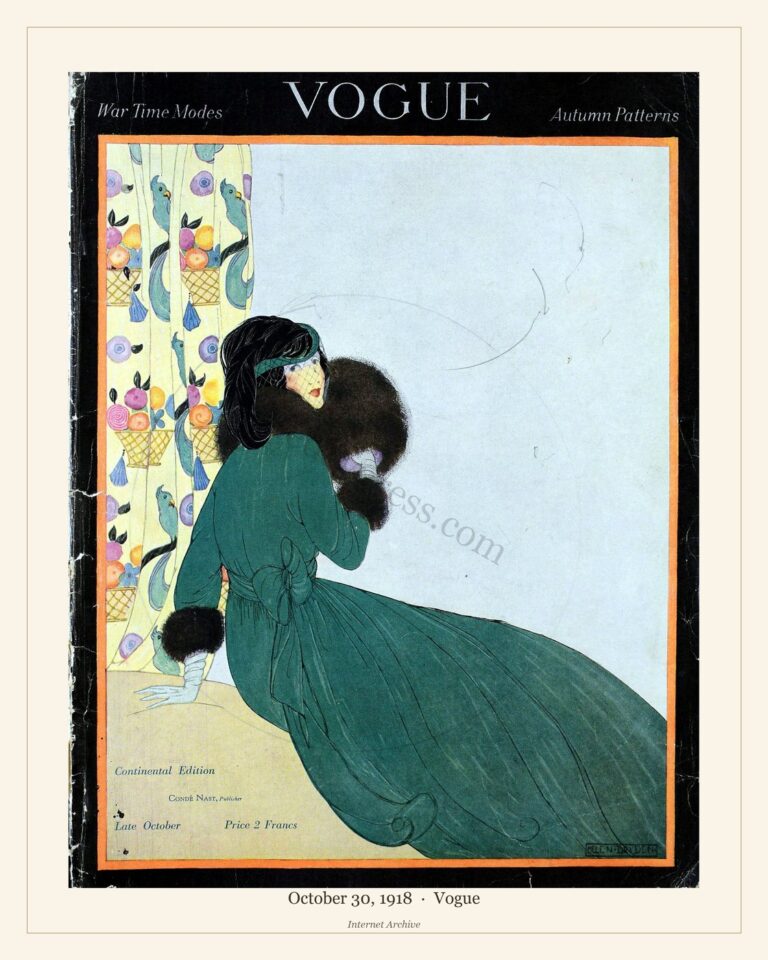
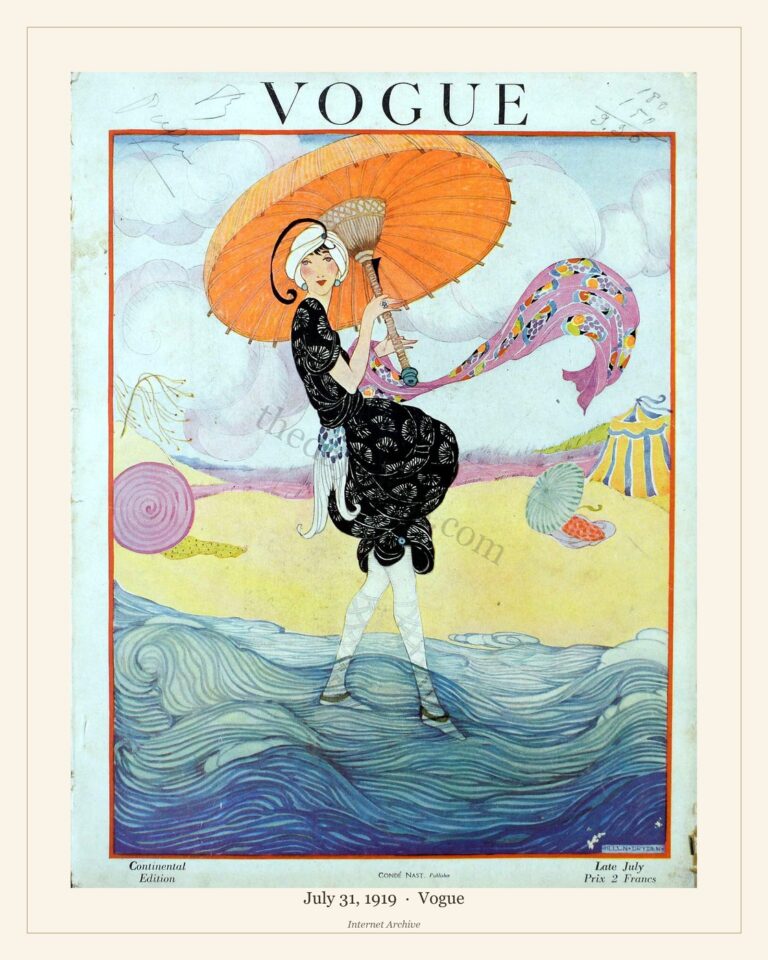
The cover, like every Vogue cover from 1909 to 1932, was a commissioned illustration. By 1920 the covers were moving decisively toward the geometric, Art Deco look — the work of Georges Lepape and Eduardo Benito alongside longer-serving artists — that would define the magazine through the Jazz Age.
Advertising discovers the woman
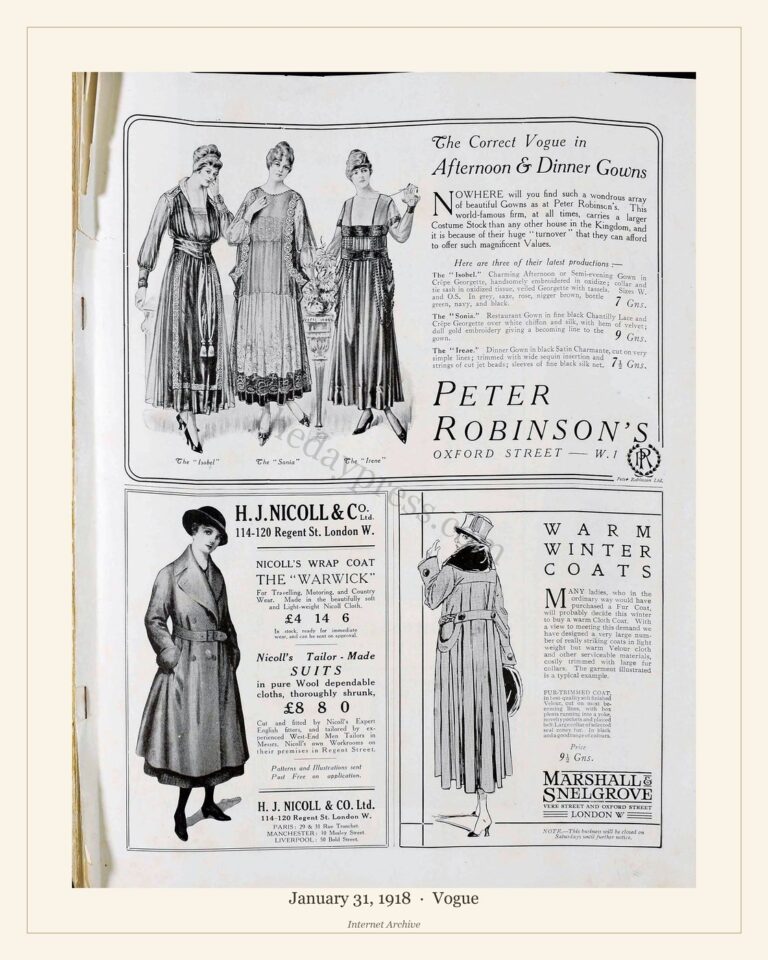
The enfranchised woman of 1920 was also, to the fast-growing advertising industry, the primary purchasing agent of the American household — and the decade’s advertising reoriented itself around her. Cosmetics, barely respectable in 1900, became a mass industry built by entrepreneurs such as Elizabeth Arden and Helena Rubinstein, and whole categories of goods were now sold to women as expressions of a modern, self-determining life.
The public-relations pioneer Edward Bernays made the logic explicit in 1929, staging a march of women smoking cigarettes as ‘Torches of Freedom’ to tie a product to women’s emancipation. Vogue — the magazine of the affluent modern woman — sat at the commercial centre of this shift, its covers presenting the very ideal that the new consumer culture was busy selling.
A dated cover from the illustrated era
Vogue’s drawn covers form a finite body of work, roughly 1909 to 1931, closed by the photographic cover of 1932. Dated to the week American women won the vote, this one stands at the dawn of the decade that made the modern woman — and the modern Vogue.
The Vogue covers in our archive come from this illustrated era, each dated to the real issue it appeared on — this one to a genuinely historic week. Browse the Vogue covers →
Frequently asked questions
When did American women win the vote?
The Nineteenth Amendment was ratified when Tennessee approved it on August 18, 1920, and certified on August 26 — the same week this issue is dated to.
What was the ‘1920s New Woman’?
The newly enfranchised, more independent woman of the decade — more likely to work, go out unchaperoned, drive, and spend her own money — whose freedom the fashion of the 1920s (bob, short skirt, straight silhouette) made visible.
Why does Vogue matter to this story?
Condé Nast built Vogue to reach exactly this affluent, modern woman; its covers presented her ideal image just as she was becoming a voter and an autonomous consumer.
Is the cover a drawing?
Yes — every Vogue cover from 1909 to 1932 was illustrated, not photographed.
Further reading
- Browse Vogue covers
- Browse magazine cover art
- Joshua Zeitz, Flapper: A Madcap Story of Sex, Style, Celebrity, and the Women Who Made America Modern (Crown, 2006).
- Carolyn Kitch, The Girl on the Magazine Cover: The Origins of Visual Stereotypes in American Mass Media (University of North Carolina Press, 2001).
The Day Press curates, restores, and reformats public-domain American printed images from 1885 to 1928 for archival-quality home printing. Browse the archive · Browse by theme, month, decade.