Vogue cover art before photography
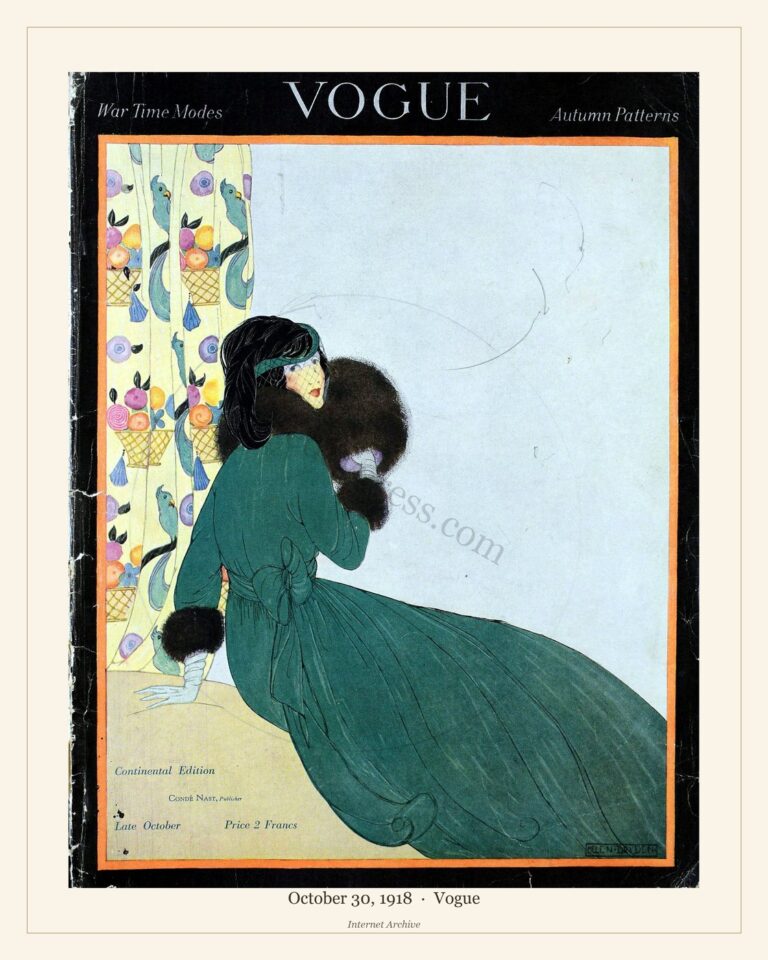
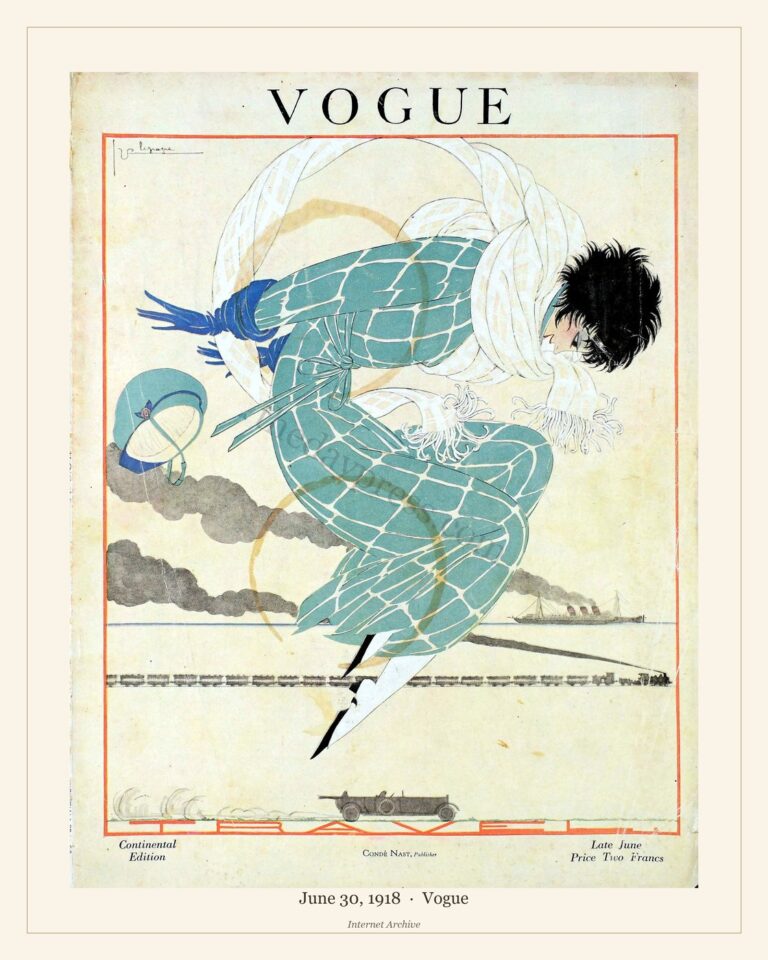
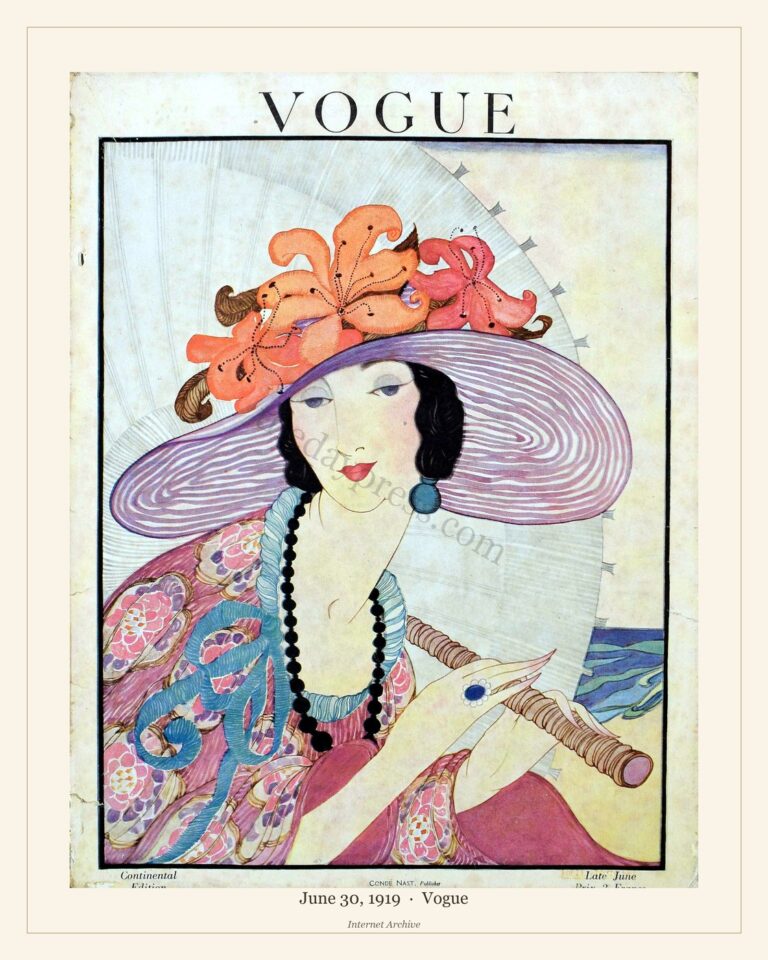
TL;DR — For its first forty years, the cover of Vogue was drawn, not photographed. Between Condé Nast’s purchase of the magazine in 1909 and the arrival of the photographic cover in 1932, a small group of illustrators — Helen Dryden, George Wolfe Plank, Georges Lepape, Eduardo Benito — made Vogue a gallery of modern design, carrying Art Nouveau, the Ballets Russes, and Art Deco onto the American newsstand. This survey traces that whole tradition: how it began, who made it, how its style evolved, and why it ended.
By The Day Press · Published September 2026
From society weekly to fashion authority
Vogue was founded in 1892 by Arthur Baldwin Turnure as a modest New York society weekly. Its transformation into the world’s leading fashion magazine — and its covers into showcases of illustration — was the work of Condé Nast, who bought it in 1909 and applied his strategy of ‘class publishing’: a small, affluent readership, premium advertising, and lavish production values that the cover announced at a glance.
Under Nast and his long-serving editor Edna Woolman Chase, the illustrated cover became Vogue’s calling card, and the magazine could afford to commission the finest commercial artists of the age.
The artists
A handful of illustrators defined the look. Helen Dryden and George Wolfe Plank carried the 1910s — Dryden fluid and decorative, Plank jewelled and fantastical. Then Georges Lepape, who had illustrated the couturier Paul Poiret, and Eduardo Garcia Benito brought the flat colour and geometry of the Paris avant-garde, turning Vogue’s covers fully Art Deco in the 1920s. These were serious designers, several of whom moved between magazine work, book design, and — in Dryden’s case — industrial design.
Their covers were not fashion plates but designed images: mood, modernity, and aspiration compressed into a poster-like whole. That is why they read as art rather than costume reference.
An evolving style
The tradition’s real ancestry lay not in the old fashion plate but in the graphic revolution of the 1890s and 1900s — the artistic poster, Art Nouveau, the flat colour of Japanese prints, and above all the Ballets Russes, whose designer Léon Bakst had transformed European ideas of colour from 1909. Vogue’s covers absorbed all of it, evolving from the decorative styles of the 1910s to the streamlined geometry of 1920s Deco.
Read in sequence, the covers of 1909 to 1931 are a compact history of modern design reaching a mass American audience, issue by dated issue.
Why the drawn cover ended
Photography ended the tradition. Edward Steichen’s photograph of a woman with a beach ball became the first photographic Vogue cover in 1932, and the camera — cheaper to reproduce, newly capable of colour and glamour — took the cover for good. That makes the drawn covers a finite, datable body of work, roughly 1909 to 1931, now collected and studied as a coherent chapter in the history of illustration.
The Vogue covers in our archive are all from this illustrated era, each dated to the real issue it appeared on. Browse the Vogue covers →
Frequently asked questions
When were Vogue covers illustrated?
From Condé Nast’s purchase in 1909 until 1932, every Vogue cover was drawn or painted. Edward Steichen’s 1932 photograph is generally cited as the first photographic cover.
Who were the main cover artists?
Helen Dryden and George Wolfe Plank in the 1910s; Georges Lepape and Eduardo Benito bringing Art Deco from around 1920.
Why are these covers considered art?
They belong to the history of the modern poster and graphic design — designed, expressive images that carried European modernism to the American newsstand — not to literal costume illustration.
Who founded Vogue?
Arthur Baldwin Turnure, in 1892, as a society weekly; Condé Nast bought it in 1909 and remade it.
Further reading
- Browse Vogue covers
- Browse magazine cover art
- William Packer, The Art of Vogue Covers 1909–1940 (Bonanza Books, 1980).
- Norberto Angeletti and Alberto Oliva, In Vogue: The Illustrated History of the World’s Most Famous Fashion Magazine (Rizzoli, 2006).
The Day Press curates, restores, and reformats public-domain American printed images from 1885 to 1928 for archival-quality home printing. Browse the archive · Browse by theme, month, decade.