In focus: Vogue — January 31, 1917
TL;DR — The Vogue issue dated January 31, 1917 is a late-winter fashion number from the magazine’s illustrated-cover era, published in the last weeks of American neutrality — Germany resumed unrestricted submarine warfare the very next day, February 1, and the United States was at war by April. Beyond the date, this cover is a good window onto the single idea that built modern Vogue: Condé Nast’s theory of ‘class publishing’, the deliberate choice to chase a small, wealthy readership rather than the largest possible one. This piece explains that strategy, how it produced Vogue’s illustrated covers, and why the drawn covers of 1909–1932 are collected as design history today.
By The Day Press · Published October 2026
Condé Nast and the theory of ‘class publishing’
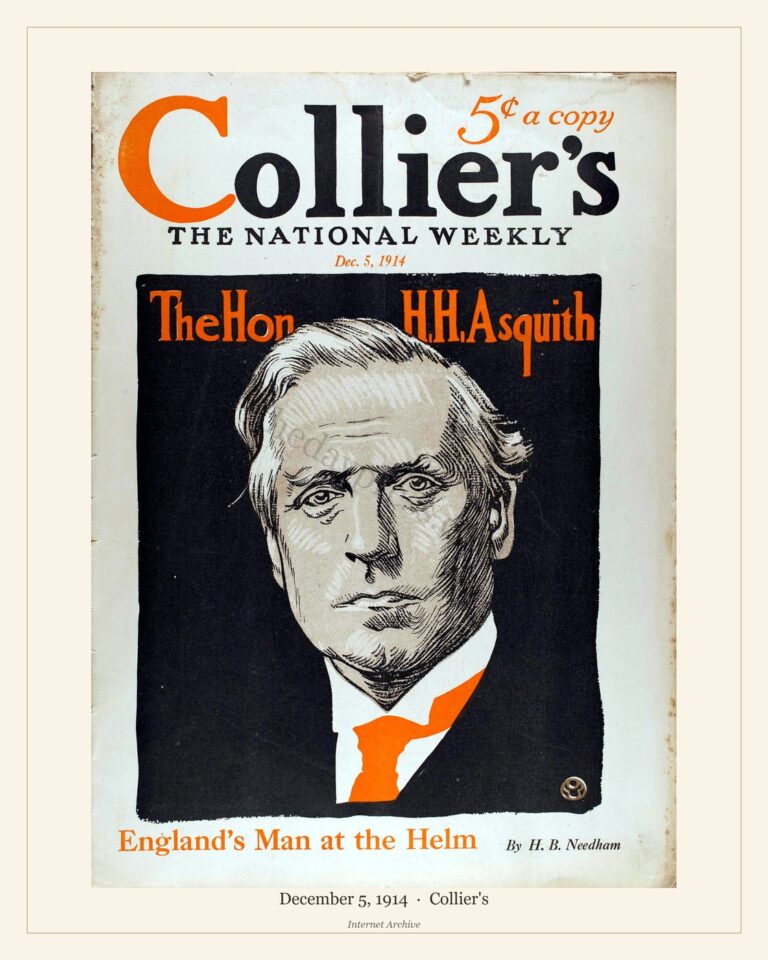
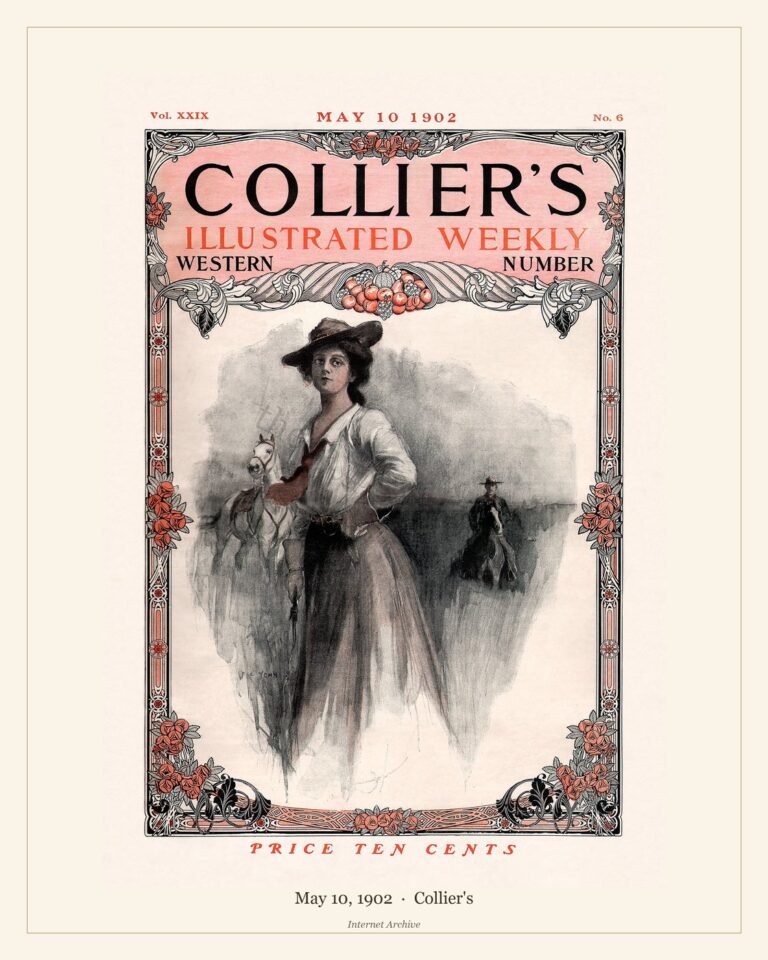
Condé Montrose Nast did not invent Vogue — Arthur Baldwin Turnure founded it as a New York society weekly in 1892 — but he invented the Vogue we recognise. Nast had made his name in advertising, first at Collier’s Weekly, where as advertising manager he drove the magazine’s ad revenue up many times over in a few years. He understood, earlier and more clearly than most, that a magazine’s real product is its readership, sold to advertisers.
When he bought Vogue in 1909 he applied a deliberate and, at the time, counter-intuitive strategy he called ‘class publishing’. Rather than pursue the biggest circulation he could — the model of the mass magazines — he aimed for a small, affluent, tightly-defined audience and charged advertisers a premium to reach exactly the people most likely to buy luxury goods. He raised Vogue’s cover price, thickened and improved the paper, and refused advertising that did not fit the reader he was cultivating.
The strategy worked, and it is why Vogue could afford what it put on its cover. A magazine built on premium advertising to a rich readership had both the incentive and the money to commission the finest illustration available — the cover was the magazine’s own advertisement for the world it promised.
What that produced: the illustrated cover
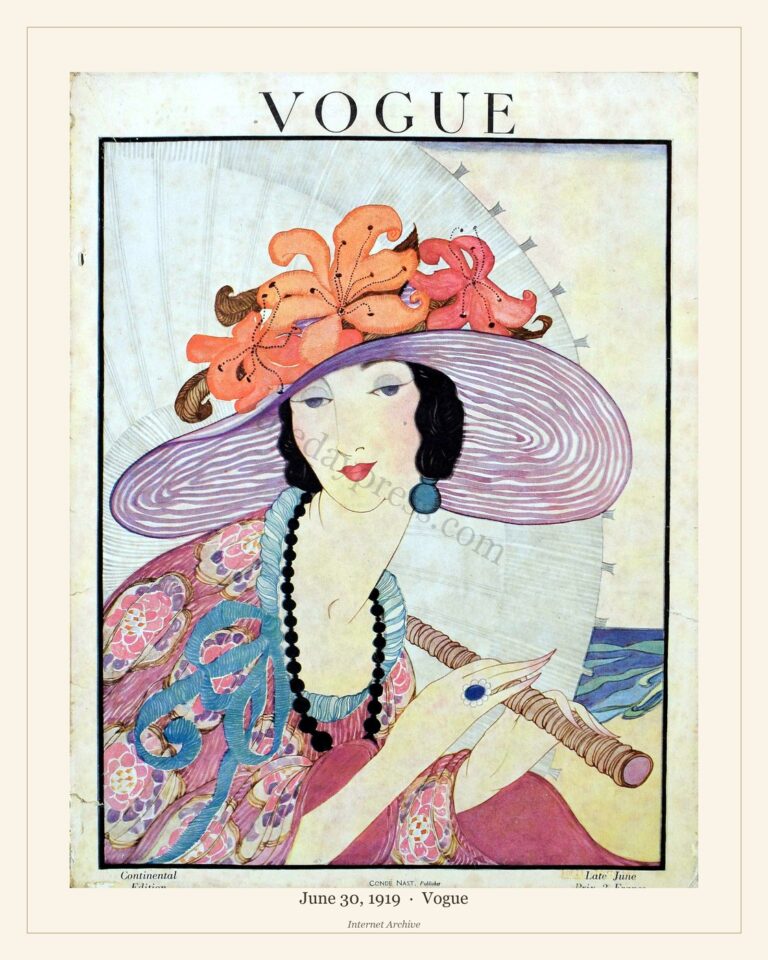
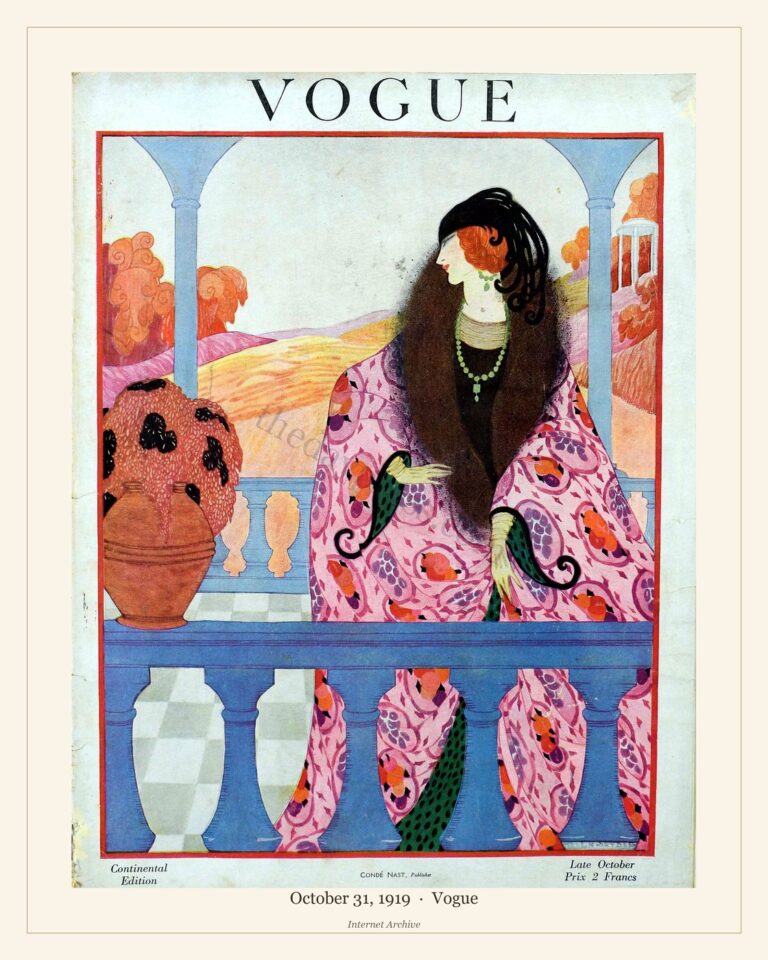
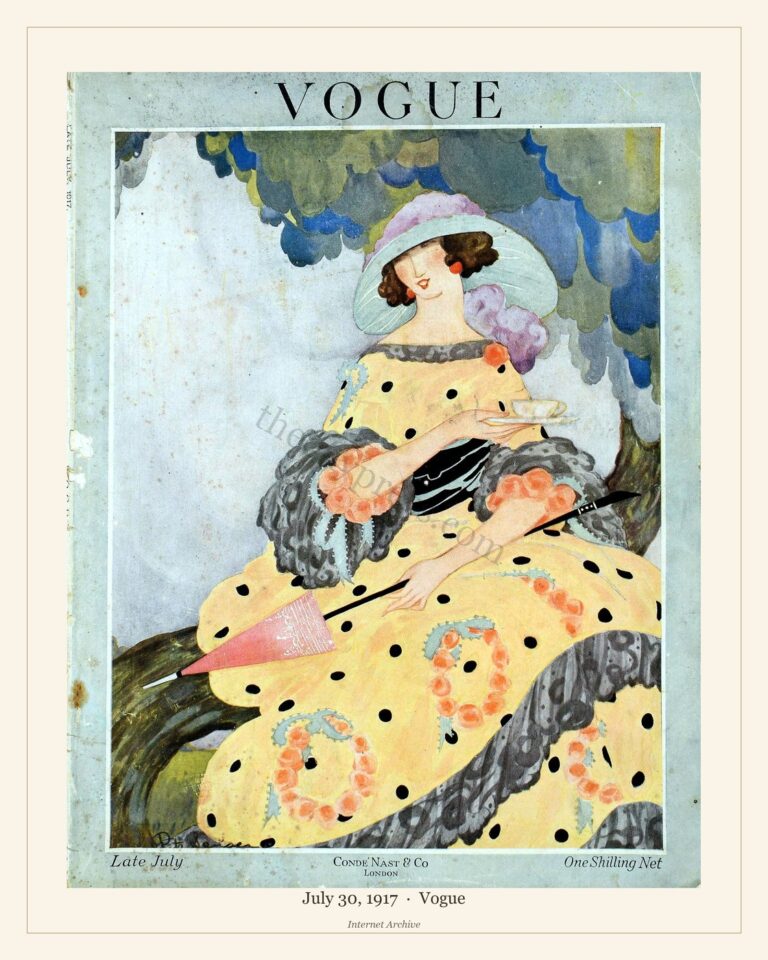
Between Nast’s purchase in 1909 and 1932, when Edward Steichen’s photograph took the cover, every Vogue cover was a drawing or a painting. Nast and his editor Edna Woolman Chase, who ran the magazine from 1914 to 1952, commissioned the best commercial artists of the day: Helen Dryden and George Wolfe Plank through the 1910s, then Georges Lepape and Eduardo Garcia Benito bringing the flat colour and geometry of the Paris avant-garde.
These covers were not fashion reports. They were designed images — mood, modernity, and social aspiration compressed into a single striking picture meant to sell the magazine and the world it stood for from a crowded newsstand. That is why a Vogue cover of this date survives as graphic art when the actual dresses of the winter of 1917 are long forgotten.
Late January 1917: the last weeks of neutrality
The date sits on the eve of a decisive turn. When this issue went on sale the United States was still officially neutral in the First World War, as it had been since 1914. The day after its cover date — February 1, 1917 — Germany announced the resumption of unrestricted submarine warfare, sinking neutral and civilian shipping without warning. The United States broke off diplomatic relations within days and declared war on April 6.
A late-January Vogue was a winter-into-spring fashion number, previewing the coming season for its readers in the confident, moneyed register the magazine had perfected. Read against the calendar, it is a small document of the last ordinary weeks before the country’s war — not because the drawing depicts anything of the sort, but because it shows what the American leisure class was being sold in the final days of peace.
Why these covers are collected today
The illustrated Vogue cover is a finite, datable tradition — roughly 1909 to 1932 — and it sits at a recognised point in design history: the moment European modernism, by way of Nast’s commissions, entered American popular visual culture. Art historians treat these covers as the channel through which Ballets Russes colour and Art Deco geometry reached the newsstand.
An original, restored and framed, is a piece of that history and of Nast’s improbable bet that a magazine could grow rich by staying small. The covers outlived the strategy, the war, and the fashions they advertised.
The Vogue covers in our archive are all from this illustrated era, each dated to the real issue it appeared on. Browse the Vogue covers →
Frequently asked questions
What was Condé Nast’s ‘class publishing’?
The strategy of targeting a small, affluent readership and charging advertisers a premium to reach it, rather than chasing the largest circulation. Nast applied it to Vogue after buying the magazine in 1909, and it defined the magazine’s character and paid for its lavish production.
Was the United States at war when this issue appeared?
Not yet. It was published on January 31, 1917, during the last weeks of American neutrality. Germany resumed unrestricted submarine warfare the next day, and the United States declared war on April 6, 1917.
Were Vogue covers illustrations at this time?
Yes. From 1909 until 1932 every Vogue cover was drawn or painted; Edward Steichen’s 1932 photograph is generally cited as the first photographic cover.
Who founded Vogue?
Arthur Baldwin Turnure, in 1892, as a New York society weekly. Condé Nast bought it in 1909 and remade it into the international fashion authority.
Further reading
- Browse Vogue covers
- Browse magazine cover art
- Caroline Seebohm, The Man Who Was Vogue: The Life and Times of Condé Nast (Viking, 1982).
- Norberto Angeletti and Alberto Oliva, In Vogue: The Illustrated History of the World’s Most Famous Fashion Magazine (Rizzoli, 2006).
The Day Press curates, restores, and reformats public-domain American printed images from 1885 to 1928 for archival-quality home printing. Browse the archive · Browse by theme, month, decade.