In focus: Vogue — December 31, 1917
TL;DR — The Vogue issue dated December 31, 1917 is a New Year number closing a wartime year. Its date is a good occasion to introduce the person who, more than any editor, shaped what Vogue was: Edna Woolman Chase, who joined the magazine in 1895 addressing envelopes and edited it from 1914 to 1952. This piece tells her story — including the 1914 New York fashion show she improvised when the war cut off Paris — and sets it beside the illustrated cover and the turn into 1918.
By The Day Press · Published October 2026
Edna Woolman Chase: fifty-six years at Vogue
Edna Woolman Chase joined Vogue in 1895, at eighteen, working in the circulation department addressing subscription envelopes. She stayed for fifty-six years, rising to editor-in-chief in 1914 and holding that post until 1952 — one of the longest and most consequential editorships in magazine history. When Condé Nast bought Vogue in 1909 he found in Chase an editor whose exacting standards matched his commercial ambition.
Chase set the magazine’s tone and its famously strict professional code. She dictated standards of dress and conduct for her staff, cultivated relationships with the Paris couture houses, and enforced a seriousness about fashion as a subject that helped make Vogue an authority rather than a mere catalogue. Her long partnership with Nast — his business vision, her editorial judgement — is the axis the whole magazine turned on in the years this cover comes from.
The 1914 Fashion Fête: American fashion’s first showcase
Chase’s single most historically important act came in 1914. When the outbreak of war cut off the Paris collections that American fashion — and Vogue — depended on, Chase organised a ‘Fashion Fête’ in New York: a charity fashion show of American designers’ work, staged at a moment when the very idea of American, rather than Parisian, fashion authority was novel.
It was a landmark. By putting American designers on a formal runway when Paris was unavailable, the event helped seed the idea of a domestic American fashion industry with its own standing — an idea that would take decades to mature but which had one of its early public moments under Chase’s direction. It also demonstrated how directly the war reshaped the fashion world Vogue reported on.
The New Year cover and the turn into 1918
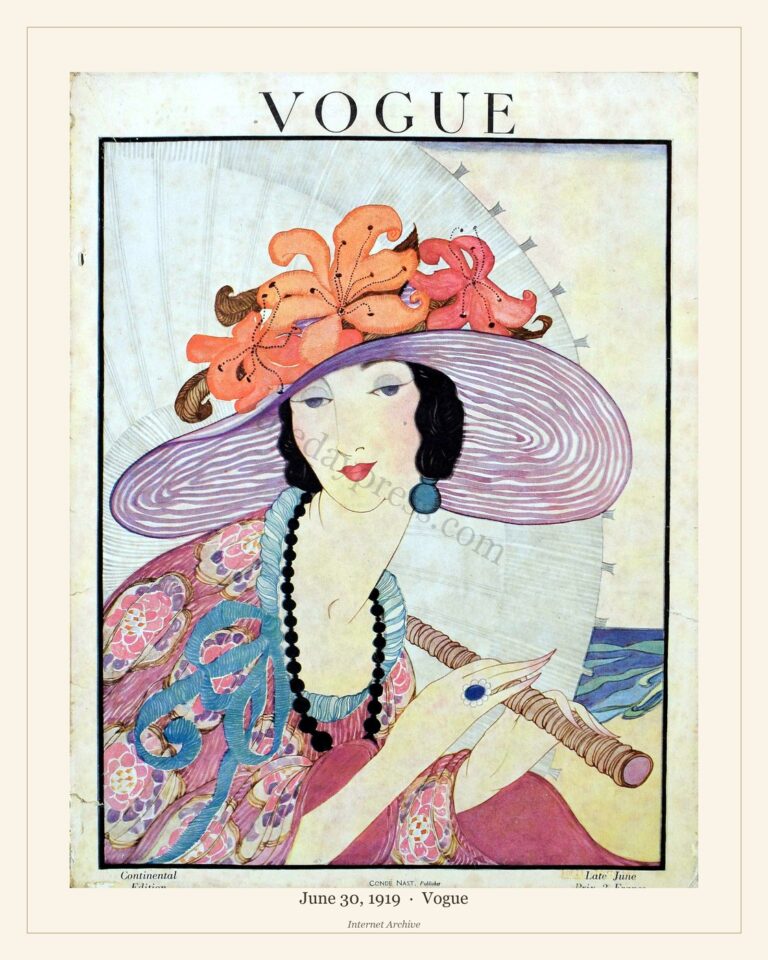
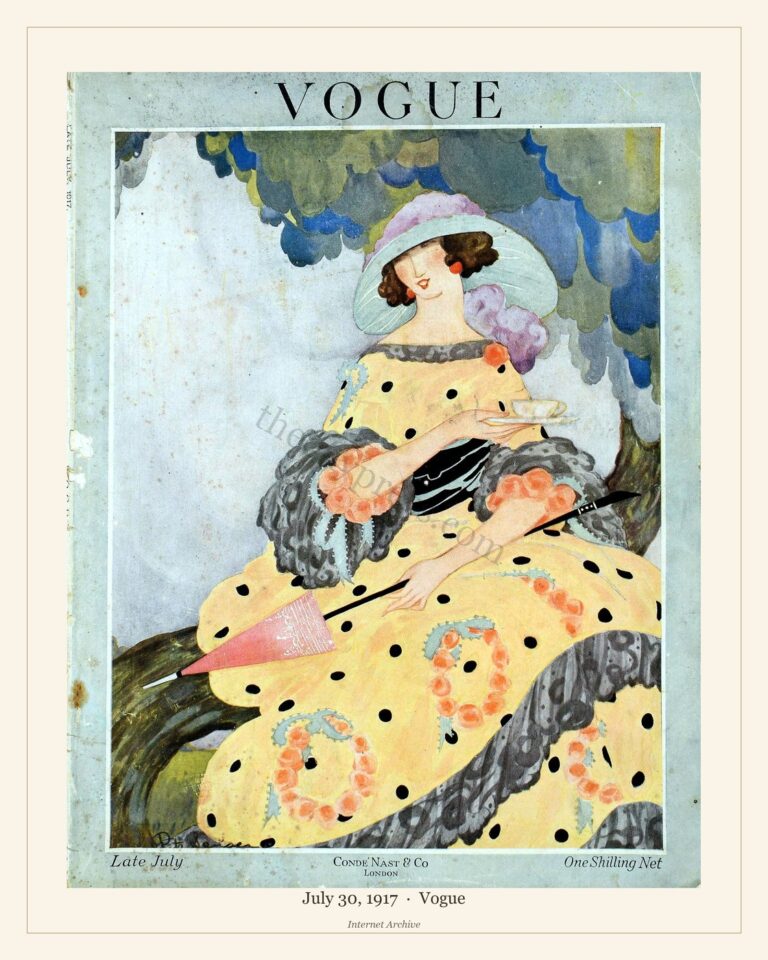
This issue, dated to the last day of 1917, is one of Vogue’s New Year numbers, looking ahead to the year’s social and fashion calendar. Its cover, like every Vogue cover from 1909 to 1932, was a commissioned illustration in the magazine’s decorative house style rather than a photograph.
The year it looked toward, 1918, would bring the end of the war in November and the beginning of the social and stylistic release that produced the 1920s. A New Year cover from the close of 1917 sits right at that threshold — the last New Year of the war, previewed in the confident register Chase and Nast had built.
The fashion editor as a profession
Chase’s Vogue was also, in effect, a school. She made the fashion editor a serious profession — a person whose judgement about what appeared, what was reported, and what was ignored carried real cultural power — and she trained a generation who carried that idea outward. The most famous case is Carmel Snow, who worked under Chase at Vogue in the 1920s before defecting to the rival Harper’s Bazaar, which she edited into a legend. The Vogue–Bazaar rivalry that shaped twentieth-century fashion journalism ran directly out of Chase’s newsroom.
That editorial bloodline is part of the era’s legacy. The modern role of the fashion director — the arbiter who decides what a magazine will champion — was substantially invented in the Nast–Chase Vogue, and the illustrated covers of these years were among the first and most visible expressions of that editorial authority.
A dated cover from the illustrated era
Vogue’s drawn covers form a finite body of work, roughly 1909 to 1931, ended by the photographic cover of 1932. Dated to December 31, 1917, this one belongs to the height of the Chase–Nast partnership — and pairs naturally with a New Year or January date.
The Vogue covers in our archive all come from this illustrated era, each dated to the real issue it appeared on. Browse the Vogue covers →
Frequently asked questions
Who was Edna Woolman Chase?
Vogue’s editor-in-chief from 1914 to 1952. She joined the magazine in 1895 in the circulation department and spent fifty-six years there, shaping its editorial standards through the whole illustrated-cover era and beyond.
What was the 1914 Fashion Fête?
A New York fashion show of American designers that Chase organised when the war cut off the Paris collections — an early public showcase for the idea of an American fashion industry.
Why are there Vogue issues dated both December 30 and 31, 1917?
Vogue was a semi-monthly, so two closely-dated numbers could fall at the year’s end — a feature of its twice-a-month schedule.
Is the cover a drawing?
Yes — every Vogue cover from 1909 to 1932 was illustrated, not photographed.
Further reading
- Browse Vogue covers
- Browse New Year cards
- Edna Woolman Chase and Ilka Chase, Always in Vogue (Doubleday, 1954).
- Caroline Seebohm, The Man Who Was Vogue: The Life and Times of Condé Nast (Viking, 1982).
The Day Press curates, restores, and reformats public-domain American printed images from 1885 to 1928 for archival-quality home printing. Browse the archive · Browse by theme, month, decade.