In focus: Vogue — March 31, 1919
TL;DR — The Vogue issue dated March 31, 1919 is a spring number from the first post-war year, published while the Paris Peace Conference was still in session at Versailles. Its date is a good occasion to explain the institution Vogue’s whole authority rested on — the Paris couture system — and how it rebuilt itself after the war, with a new generation of designers (Chanel, Vionnet, Patou) rising beside the reopening pre-war houses. This piece covers the couture system, its post-war revival, and the illustrated cover that fronted the season fashion came back to life.
By The Day Press · Published September 2026
The couture system Vogue reported on
Vogue’s authority rested on a single privileged relationship: Paris. Since the mid-nineteenth century, when the Englishman Charles Frederick Worth established the model, high fashion had been organised around the couture house — a named designer who created original seasonal collections, showed them at the ‘openings’, and sold both finished garments and the right to copy them to an international clientele and trade. Paris set fashion; the rest of the world, Vogue included, followed and transmitted it.
This is why a fashion magazine in New York oriented its entire calendar around events in France. Vogue’s spring and autumn issues existed to carry the Paris openings to American readers, and its cover artists, editors, and buyers all worked in service of that transmission. The magazine was, in a real sense, an American window onto a French institution.
The war, and the recovery of 1919
The First World War badly disrupted the couture system. Houses closed or curtailed their work, the international buyers and press could not travel freely, and the flow of garments and information across the Atlantic became dangerous and unreliable. It was this disruption that had pushed Vogue’s editor Edna Woolman Chase to stage a New York show of American designers back in 1914.
The spring of 1919 was the season Paris came back. This issue appeared while the Peace Conference was redrawing the map of Europe — the Treaty of Versailles would be signed that June — and, in parallel, the couture openings resumed, the buyers and journalists returned, and Paris reasserted its command of world fashion. For Vogue and its readers, it marked the return of the seasonal rhythm the war had suspended.
A new generation rises
The couture that revived after the war was not quite the couture that had entered it. The pre-war houses reopened, but a new generation was rising who would define the coming decade: Coco Chanel, whose easy, unstructured clothes suited the new age; Madeleine Vionnet, whose bias cut would transform how cloth moved on the body; Jean Patou, master of sportswear and the clean modern line. The confident, modern fashion of the 1920s was taking shape in exactly these post-war seasons, and Vogue was there to report it.
A spring-1919 cover therefore sits at a genuine turning point — the moment the pre-war and post-war fashion worlds overlapped, the old houses and the new names sharing the same openings.
The illustrated cover
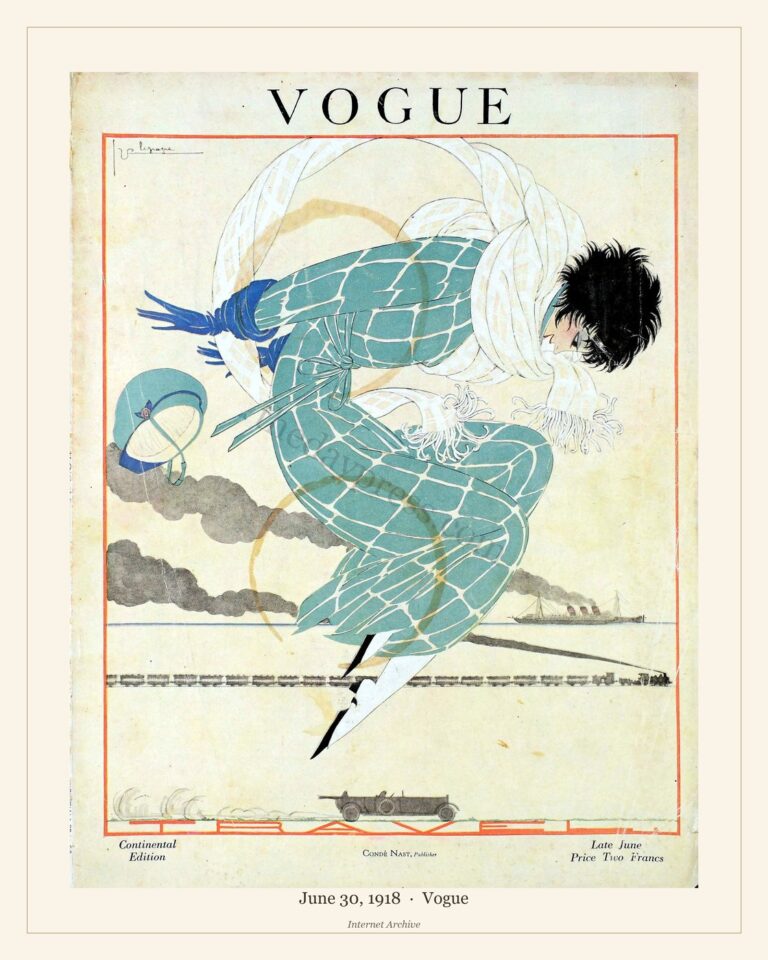
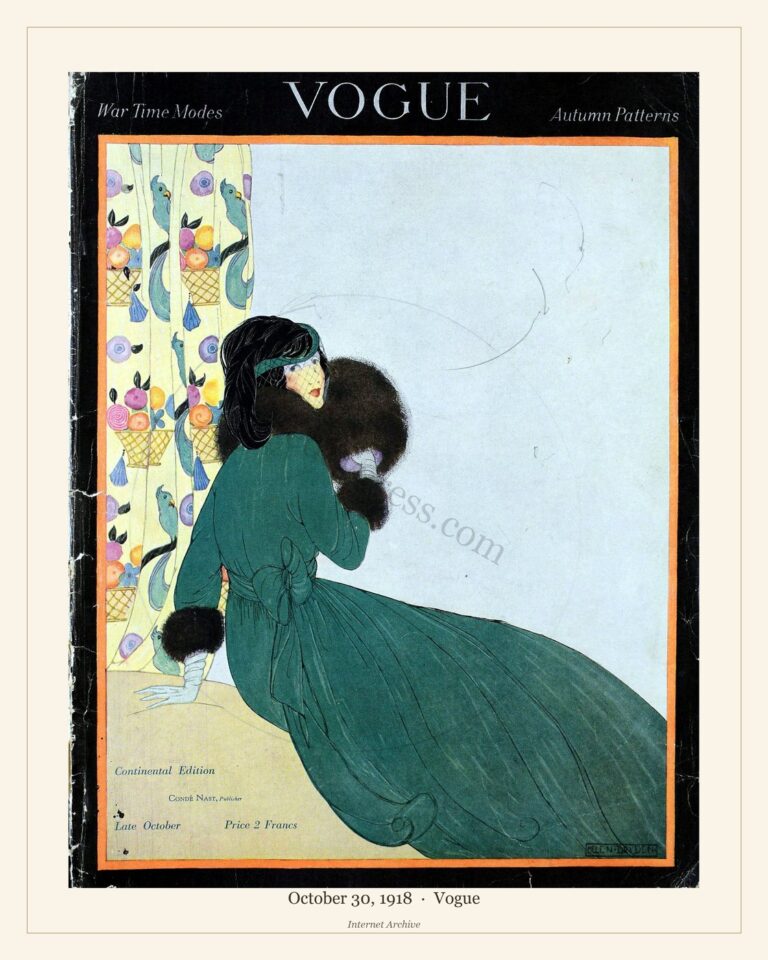
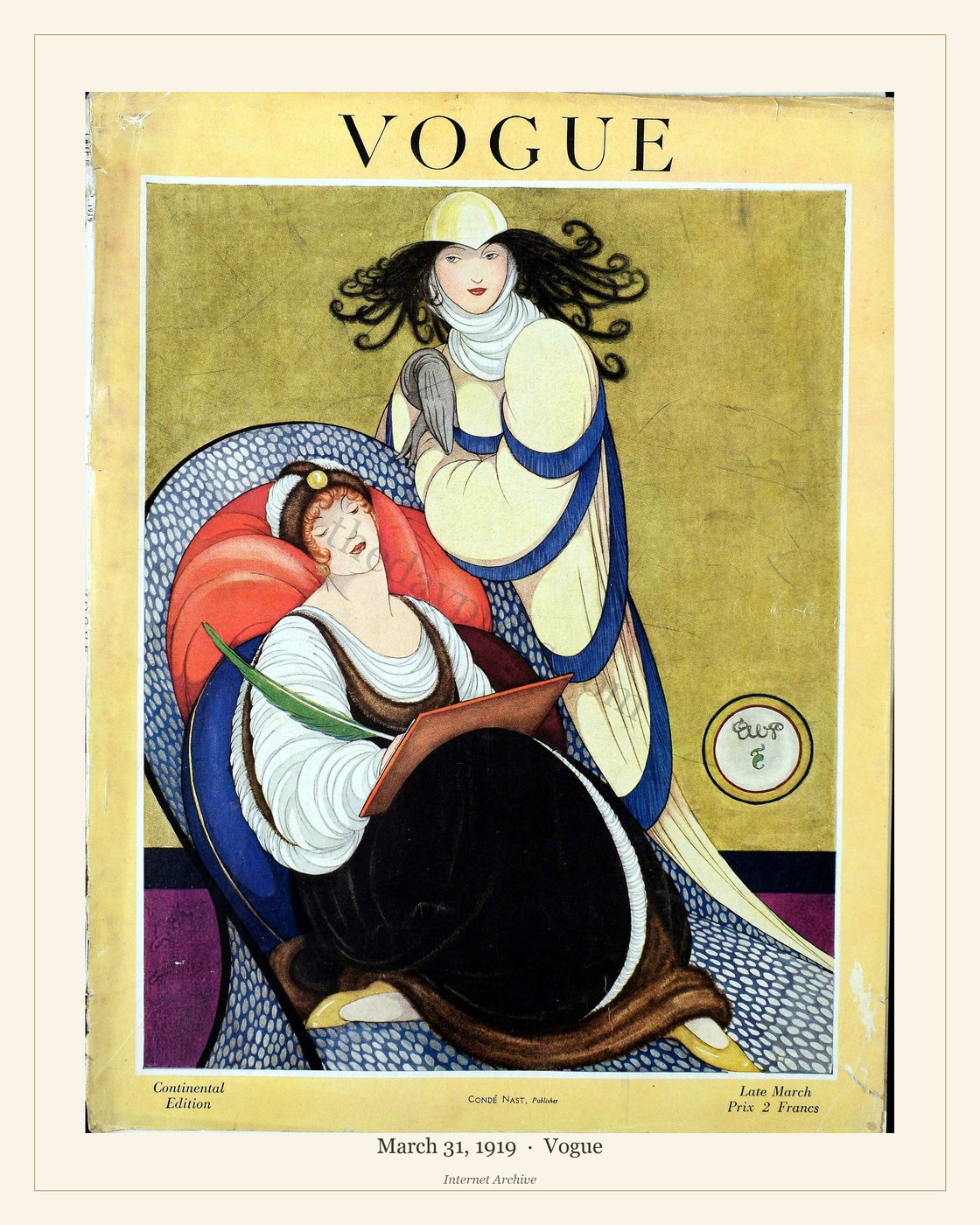
As with every Vogue cover from 1909 to 1932, the front of this issue was a commissioned drawing, not a photograph. A spring number forecast the season, now for the first time in years without wartime restraint, and the covers of the next few years would grow visibly more modern as Art Deco took hold. The cover is best read as an idea of spring and renewal rather than a record of a specific garment.
A dated cover from the illustrated era
Vogue’s drawn covers form a finite body of work, roughly 1909 to 1931, closed by the photographic cover of 1932. Dated to the spring of 1919, this one belongs to the season Paris couture — and the seasonal fashion world Vogue lived in — returned to life after the war.
The Vogue covers in our archive are drawn from this illustrated era, each dated to the real issue it appeared on. Browse the Vogue covers →
Frequently asked questions
What is the couture system?
The Paris-centred organisation of high fashion — named designers creating original seasonal collections, shown at the ‘openings’ and sold to an international clientele and trade. It set world fashion, which Vogue reported and transmitted.
Who founded modern couture?
Charles Frederick Worth, an Englishman working in Paris, is usually credited with establishing the modern couture house in the mid-nineteenth century.
Which designers rose after the war?
Coco Chanel, Madeleine Vionnet, and Jean Patou, among others — the generation that would define 1920s fashion — rose alongside the reopening pre-war houses.
Is the cover a drawing?
Yes — every Vogue cover from 1909 to 1932 was illustrated, not photographed.
Further reading
- Browse Vogue covers
- Browse magazine cover art
- Valerie Steele, Paris Fashion: A Cultural History (Oxford University Press, 1988).
- Nancy J. Troy, Couture Culture: A Study in Modern Art and Fashion (MIT Press, 2003).
The Day Press curates, restores, and reformats public-domain American printed images from 1885 to 1928 for archival-quality home printing. Browse the archive · Browse by theme, month, decade.