In focus: Vogue — March 12, 1926
TL;DR — The Vogue issue dated March 12, 1926 comes from the height of the Jazz Age, when the magazine’s covers were among the finest Art Deco illustration produced anywhere. Its date is a good occasion to explain the mature Art Deco Vogue cover: the 1925 Paris exposition that gave the style its name, the flapper and the ‘garçonne’ look the covers dressed, and the fact that this is the last great decade of the drawn cover before photography took over around 1932. This piece covers all three, and why 1920s Vogue covers are the most collected of all.
By The Day Press · Published November 2026
The style that got its name in 1925
By 1926 the design language we call Art Deco was at its confident peak, and it had just acquired its defining showcase. The 1925 Exposition Internationale des Arts Décoratifs et Industriels Modernes in Paris — the event from whose title the term ‘Art Deco’ was much later coined — had gathered the streamlined, geometric, luxurious modern style into a single overwhelming display. Vogue’s covers were already fluent in it.
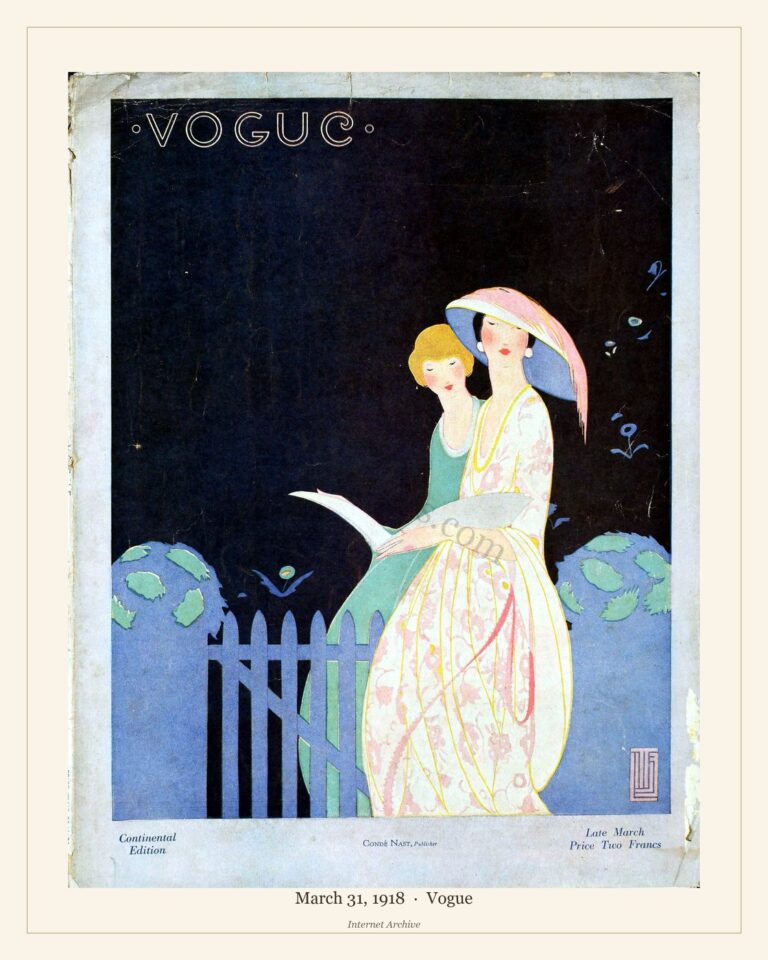
The mature Deco cover, in the hands of Eduardo Benito, Georges Lepape, and their colleagues, reduced fashion to elegant geometry: flat colour, elongated figures, strong symmetry, an air of cool machine-age glamour. These are among the most sophisticated commercial images of the twentieth century, and they belong to a very short window of peak achievement in the mid-to-late 1920s.
The flapper and the woman the covers dressed
The woman on a 1926 Vogue cover is the fully-arrived modern woman of the decade: bobbed hair, a straight and waistless ‘garçonne’ silhouette, a hem at the knee, an ease and confidence unimaginable twenty years earlier. The corseted S-bend of 1900 and even the loosening styles of 1919 were gone; this was the flapper’s decade, and Vogue both dressed her and defined her image.
The look owed much to designers like Gabrielle Chanel, whose simple, modern, comfortable clothes suited the new woman perfectly. Vogue’s covers translated all of it into pure design — the modern woman as an emblem of the age.
The last decade of the drawn cover
What gives these 1920s covers their particular value is that they are the end of a tradition. The illustrated Vogue cover, which had begun under Condé Nast in 1909, gave way to photography around 1932, when Edward Steichen’s work took the cover for good. The Art Deco covers of the mid-to-late 1920s are therefore the final, highest flowering of the drawn Vogue cover — which is exactly why they are the most sought-after of all.
The cover, like every Vogue cover of the era, was a commissioned illustration — an idea of modern style rendered as design, not a record of a specific garment.
A dated cover from the peak of the tradition
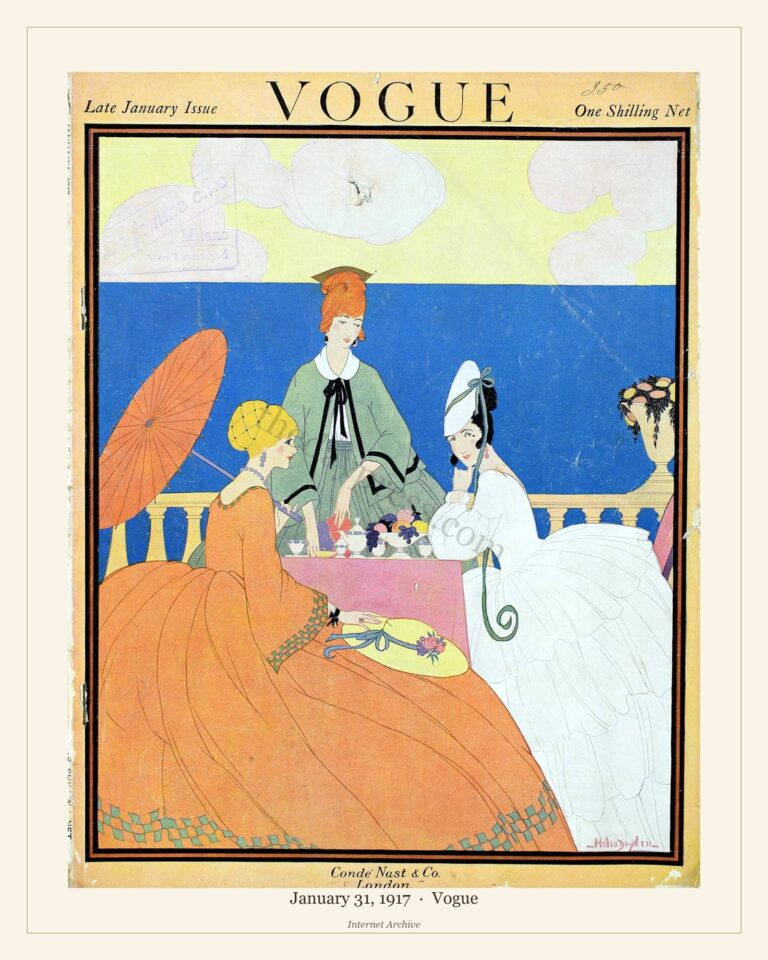
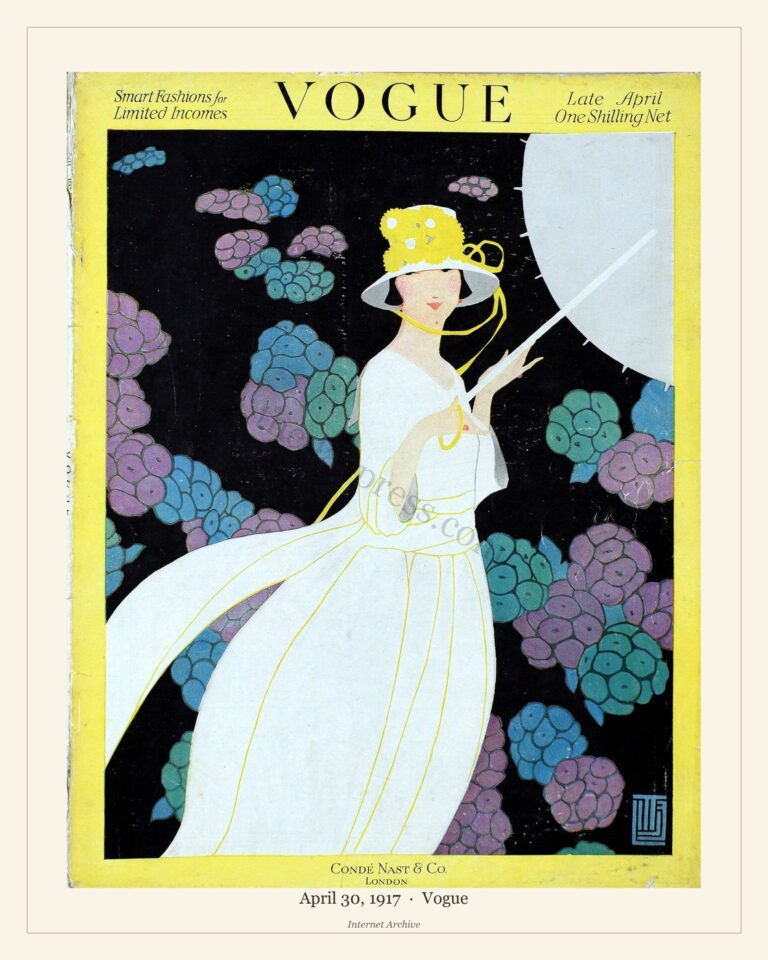
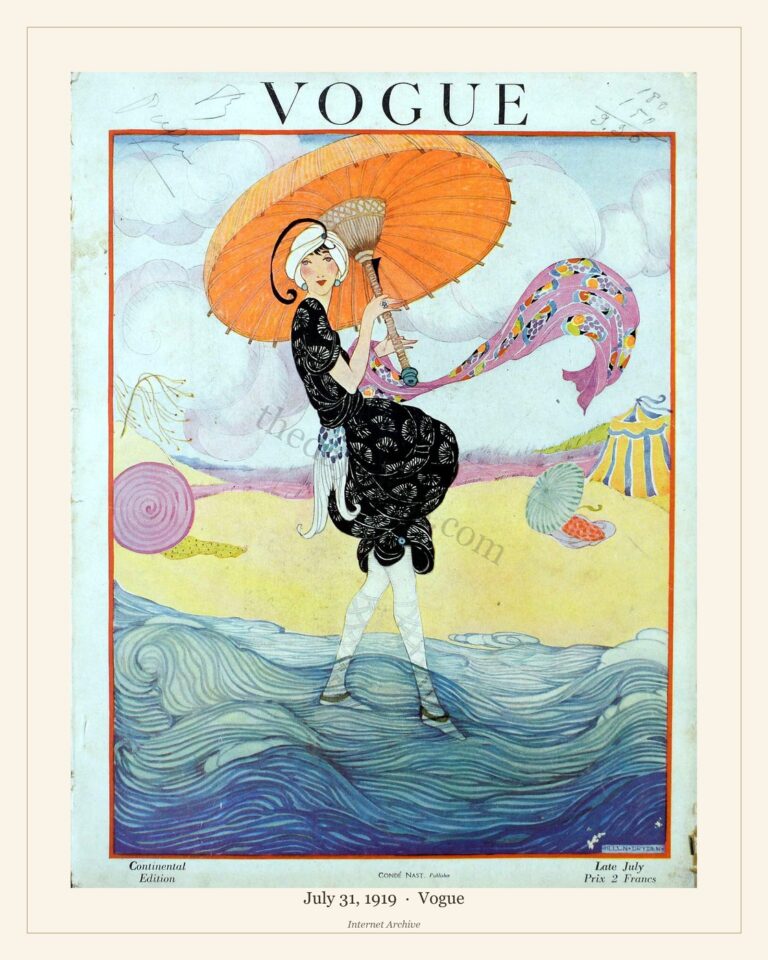
Vogue’s drawn covers form a finite body of work, roughly 1909 to 1931. Dated to 1926, this one comes from the very top of that tradition — mature Art Deco, the Jazz Age at its height, a few years before the camera ended the illustrated cover for good.
The Vogue covers in our archive include the Art Deco 1920s, each dated to the real issue it appeared on. Browse the Vogue covers →
Frequently asked questions
Where does the name ‘Art Deco’ come from?
From the 1925 Paris Exposition Internationale des Arts Décoratifs et Industriels Modernes, whose title gave the style its name decades later. By 1926 Vogue’s covers were fluent in the style.
What was the 1920s silhouette?
The straight, waistless ‘garçonne’ line with bobbed hair and a knee-length hem — the flapper — which designers like Chanel helped define and Vogue’s covers presented as the ideal.
Why are 1920s Vogue covers so collected?
They are the final, highest flowering of the drawn Vogue cover, at the peak of Art Deco, just before photography took over the cover around 1932.
Is the cover a drawing?
Yes — every Vogue cover from 1909 to 1932 was illustrated. This 1926 cover is from the last great decade of the drawn cover.
Further reading
- Browse Vogue covers
- Browse magazine cover art
- Charlotte Benton, Tim Benton and Ghislaine Wood (eds.), Art Deco 1910–1939 (V&A Publishing, 2003).
- William Packer, The Art of Vogue Covers 1909–1940 (Bonanza Books, 1980).
The Day Press curates, restores, and reformats public-domain American printed images from 1885 to 1928 for archival-quality home printing. Browse the archive · Browse by theme, month, decade.