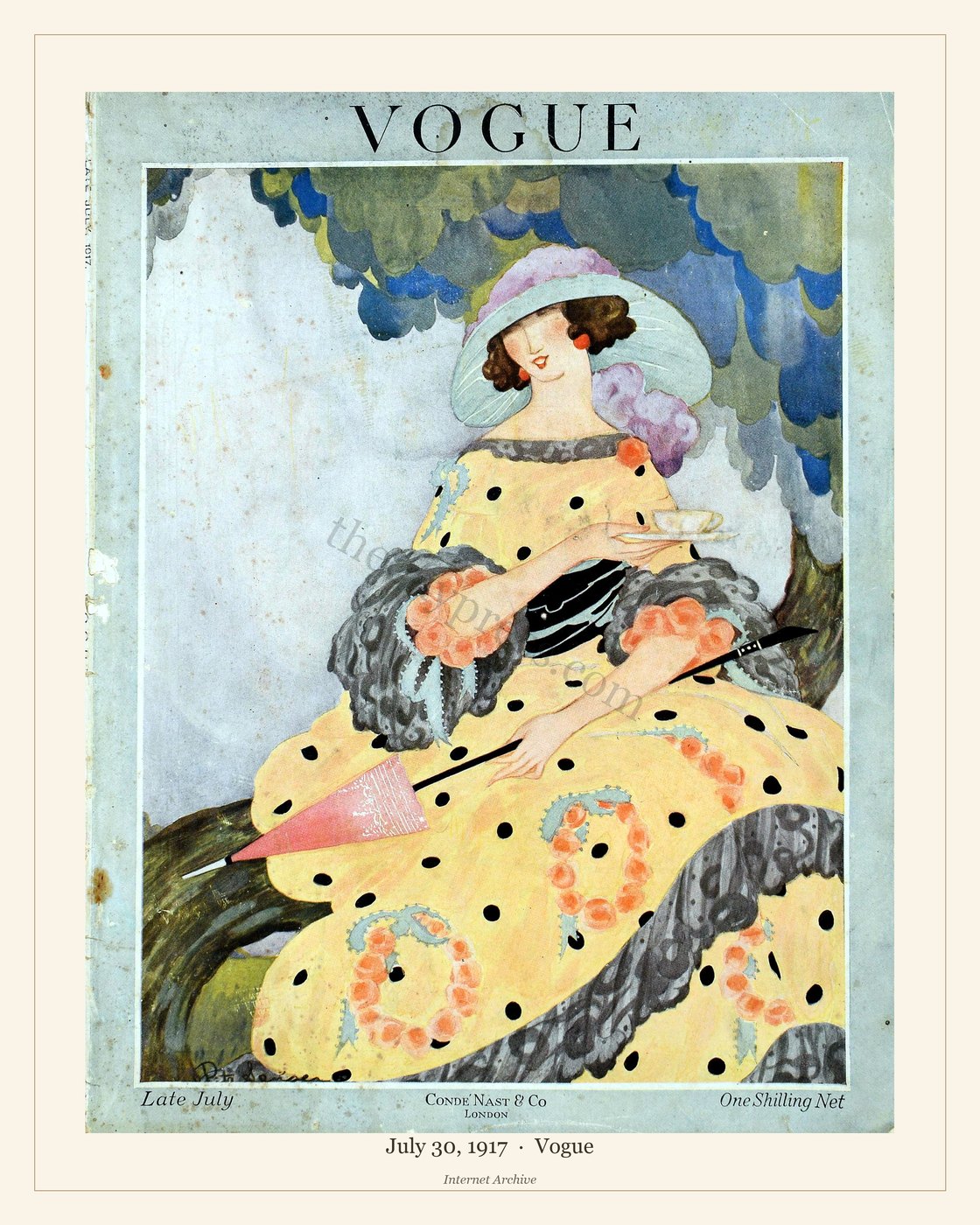
In focus: Vogue — July 30, 1917
TL;DR — The Vogue issue dated July 30, 1917 is a midsummer ‘hot weather fashions’ number from the first summer of American involvement in the First World War. Its date is a good occasion to explain something specific about how Vogue worked: the semi-monthly calendar of themed issues — spring openings, hot-weather fashions, the autumn forecast, the holiday gift number, the bride’s number — that Condé Nast built and that turned the magazine into an indispensable seasonal guide. This piece explains that editorial machine, the illustrated covers it produced, and where a midsummer 1917 issue sits in the war.
By The Day Press · Published July 2026
Vogue’s calendar of themed issues
Vogue began in 1892 as a weekly, but under Condé Nast, who bought it in 1909, it became a semi-monthly built around a fixed calendar of themed issues. This was one of Nast’s quiet but decisive innovations. Rather than a general fashion magazine appearing at intervals, Vogue became a sequence of specialised numbers, each timed to a moment in the affluent reader’s year.
The cycle was elaborate and consistent: the spring and autumn ‘openings’ that reported the new Paris collections; the ‘Forecast of Spring Fashions’ and its autumn equivalent; the hot-weather and resort numbers of midsummer; the millinery numbers; the bride’s number in spring; the hostess and holiday-gift numbers at the year’s end. A reader did not merely subscribe to Vogue; she navigated the year by it, knowing which issue would tell her what to wear and buy for each coming season.
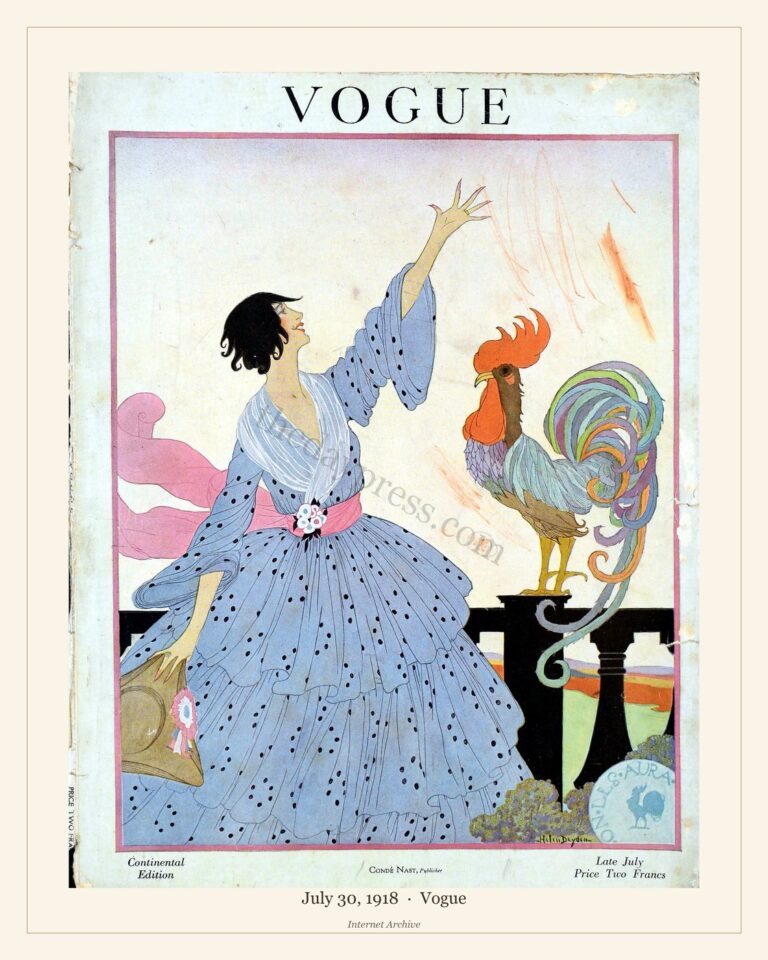
The issue dated July 30, 1917 is one of the midsummer ‘hot weather fashions’ numbers — the issue that covered resort dressing, travel, and the lighter clothes of the season. The cover, like every Vogue cover of the period, was a commissioned illustration rather than a photograph.
Why the themed calendar mattered
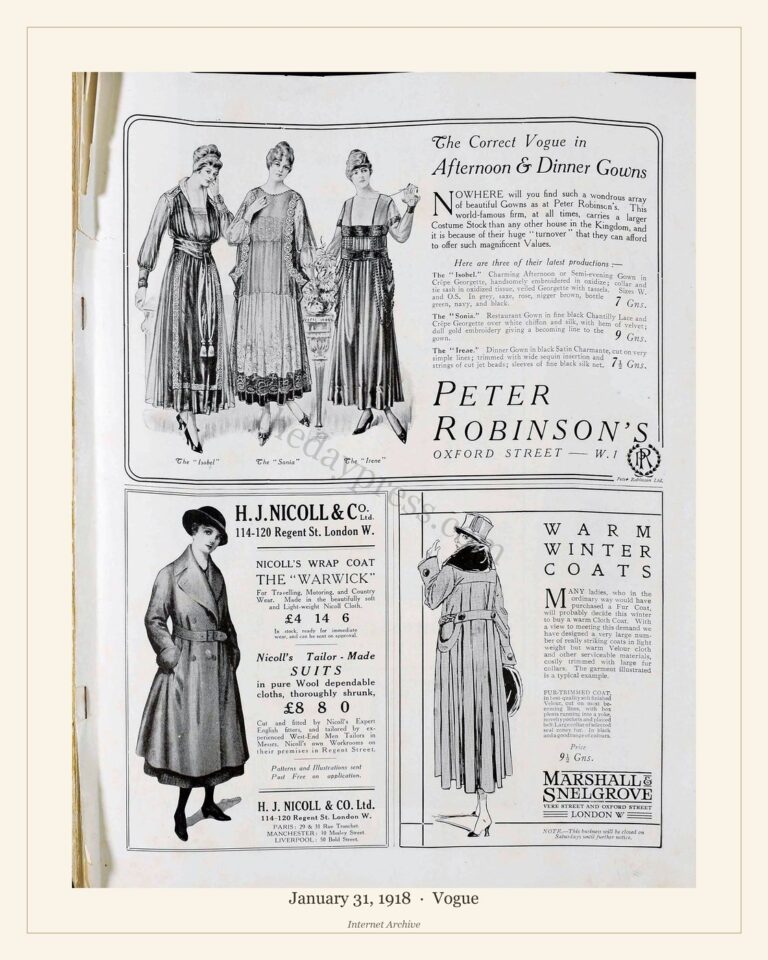
The themed-issue system did two things at once. For readers it made Vogue authoritative — the magazine that told you, on a reliable schedule, what the season required. For Nast’s advertisers it created predictable, targeted moments: a furrier bought space in the autumn numbers, a resort hotel in the hot-weather numbers, a bridal house in the spring bride’s number. The calendar aligned editorial content and advertising into a single, self-reinforcing machine.
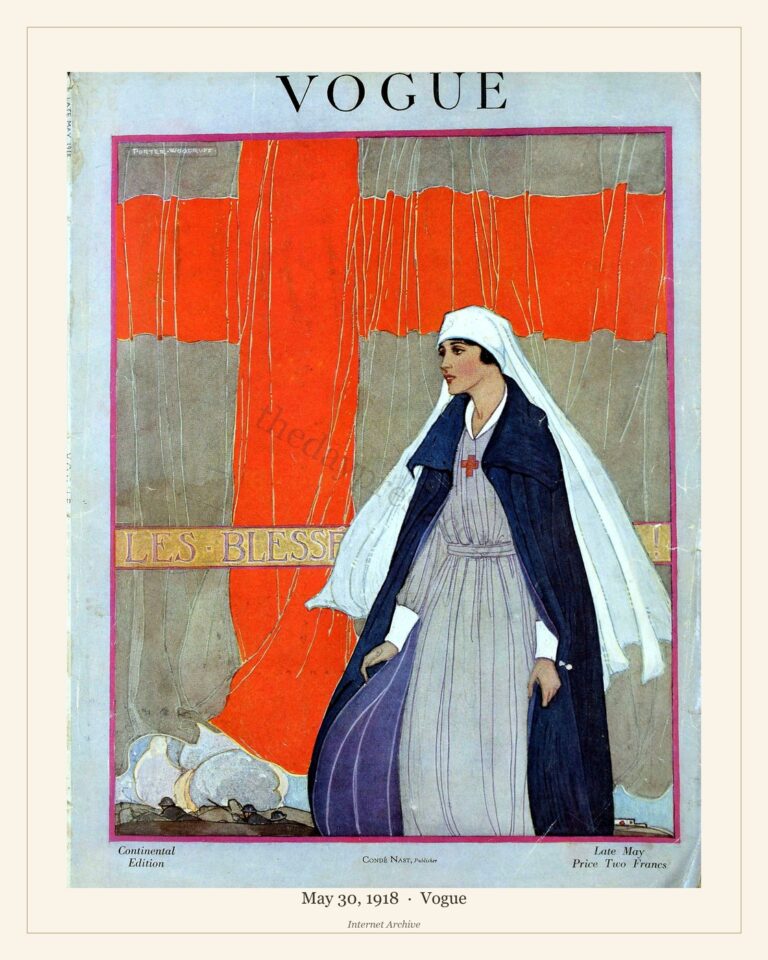
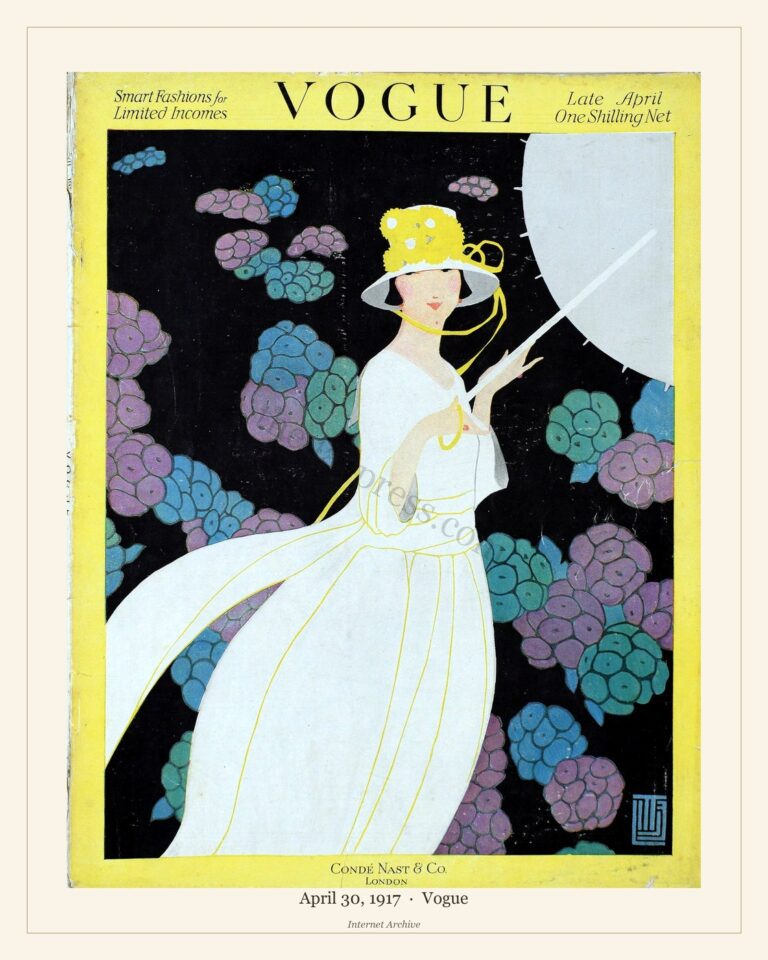
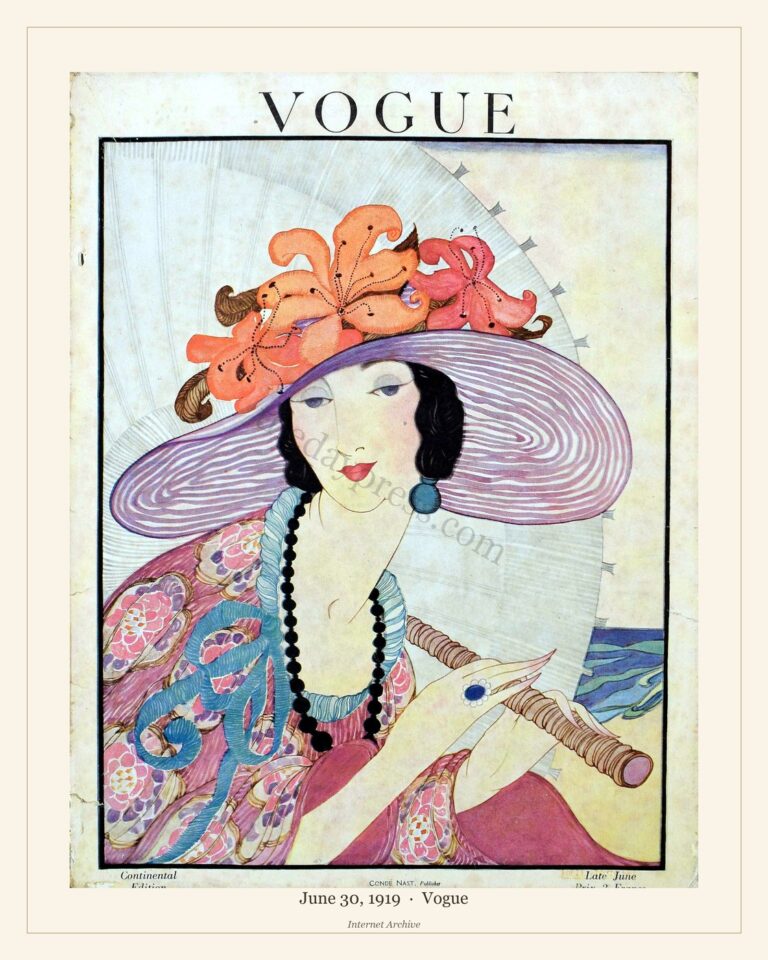
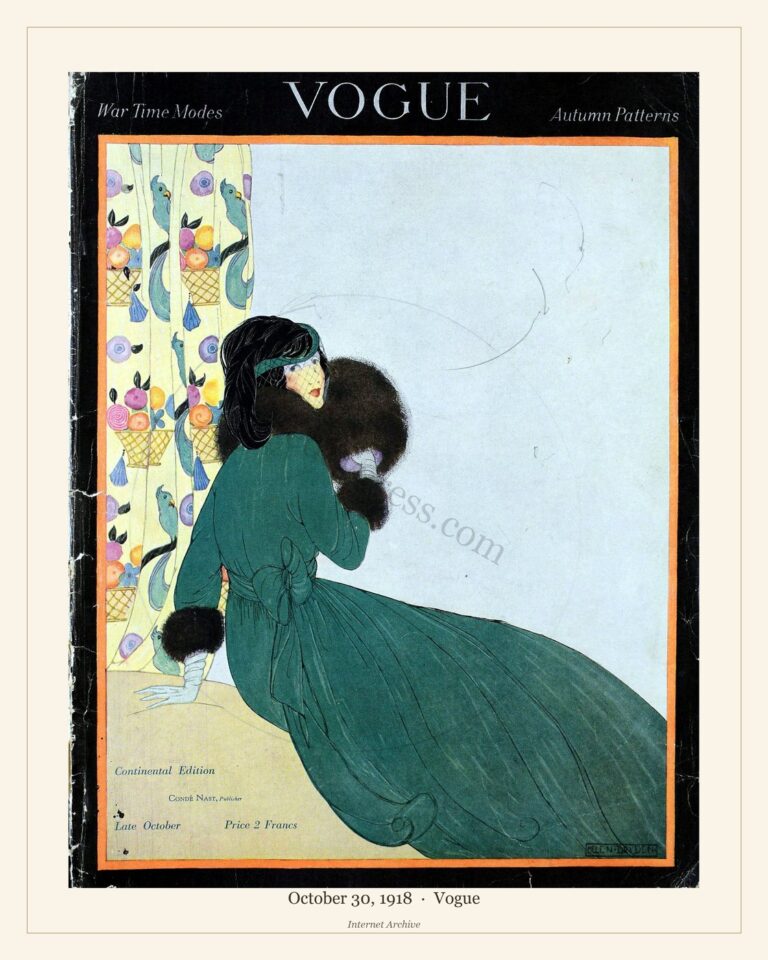
It also shaped the covers. Each themed number wanted a cover image that conveyed its season at a glance, which pushed Vogue’s artists — Helen Dryden, George Wolfe Plank, and others — toward strong, legible, mood-setting designs rather than literal fashion plates. A midsummer cover signalled ‘summer’ as an idea: light, leisure, air.
Midsummer 1917: fashion on a war calendar
By late July 1917 the United States had been at war for nearly four months. Conscription had begun, the first American troops were reaching France, and the economy was reorganising for war. Vogue kept to its seasonal calendar throughout — the hot-weather number still appeared — but the magazine’s editorial content increasingly folded the war in, promoting simpler dress, thrift, and, before long, ‘fashions for limited incomes’.
There is a genuine historical interest in that continuity: the machinery of seasonal fashion did not stop for the war; it adapted. A midsummer 1917 Vogue is the resort-and-leisure number of a country that had just sent an army to France, which is part of what makes the exact date worth knowing.
A finite tradition of drawn covers
Because photography took the Vogue cover in 1932, every drawn cover — including this one — belongs to a closed period of roughly 1909 to 1931. Collectors and design historians treat these covers as a coherent body of work: the point where modern European design reached the American newsstand, issue by dated issue, across the seasonal calendar Nast had built.
The Vogue covers in our archive span this seasonal calendar, each dated to the real issue it appeared on. Browse the Vogue covers →
Frequently asked questions
What is a Vogue ‘hot weather’ issue?
One of the themed midsummer numbers in Vogue’s seasonal calendar, covering resort wear, travel, and lighter summer dress. Vogue’s semi-monthly schedule was organised into such themed issues — spring openings, autumn forecast, bride’s number, holiday gifts, and so on.
Was Vogue a weekly or a monthly?
It began as a weekly in 1892 and became a semi-monthly under Condé Nast, appearing twice a month with a fixed calendar of themed issues.
Did the war interrupt Vogue’s fashion coverage?
No — Vogue kept to its seasonal calendar through 1917 and 1918, but increasingly framed fashion around wartime thrift and simpler dress.
Is the cover a drawing or a photograph?
A drawing. Every Vogue cover from 1909 to 1932 was illustrated; photography took the cover only in 1932.
Further reading
- Browse Vogue covers
- Browse magazine cover art
- Norberto Angeletti and Alberto Oliva, In Vogue: The Illustrated History of the World’s Most Famous Fashion Magazine (Rizzoli, 2006).
- Caroline Seebohm, The Man Who Was Vogue: The Life and Times of Condé Nast (Viking, 1982).
The Day Press curates, restores, and reformats public-domain American printed images from 1885 to 1928 for archival-quality home printing. Browse the archive · Browse by theme, month, decade.