The Gibson Girl: America’s first pin-up
TL;DR — The Gibson Girl was the pen-and-ink creation of Charles Dana Gibson, who from the early 1890s drew a tall, self-possessed young woman who became the dominant American feminine ideal for a quarter-century. She reached the public chiefly through the original Life — the satirical weekly, not the later photo magazine — and through a vast merchandising trade in prints, china, wallpaper, and sheet music. Scholars now read her as the first mass-media visual stereotype of American womanhood: modern and athletic enough to flatter the ‘New Woman’, yet safely decorative enough not to threaten anyone. This piece traces where she came from, what she meant, how she was sold, and why the flapper finally displaced her after the First World War.
By The Day Press · Published May 2027
Charles Dana Gibson and the invention of a type
Charles Dana Gibson was born near Boston in 1867 and trained briefly at the Art Students League in New York before selling his first drawing to Life in 1886, when he was nineteen. He worked in pen and ink — a demanding medium for reproduction, all decisive black line and white paper, with no colour and no room for correction — and he became its supreme American practitioner. Within a decade his line work was the most recognisable in the country.
The figure that made him famous emerged gradually across the early 1890s: a tall young woman, chin level, hair swept up into a loose pompadour, her blouse and long skirt suggesting both corseted elegance and the freedom to move. She had no name and no single model. She was a type — an idealised composite Gibson drew over and over, placed in gently satirical social scenes about courtship, marriage, and the manners of the American upper middle class. Readers began calling her the Gibson Girl, and by the second half of the 1890s she was a national phenomenon.
What the Gibson Girl meant: the ‘New Woman’, safely drawn
The Gibson Girl arrived at the same moment as the so-called New Woman — the turn-of-the-century figure who went to college, rode a bicycle, played tennis and golf, held a job before marriage, and moved through public life with a new independence. Gibson’s woman looked the part: she was athletic, capable, and cool, shown golfing and swimming and holding her own in company. She flattered a real social change.
But she was also carefully contained. She was always beautiful, always fashionable, almost always white and prosperous, and her independence never curdled into anything threatening; the satire in Gibson’s scenes usually turned on romance and social climbing, not on suffrage or work. That balance — modern enough to feel current, conventional enough to reassure — is exactly what the historian Carolyn Kitch, in her study of the magazine cover, identifies as the making of a durable visual stereotype. The Gibson Girl let the country admire the New Woman without having to reckon with her.
She was, in that sense, the first of a line. The ‘cover girl’ as a national idea — a drawn woman who tells a mass audience what to admire and aspire to — begins with her, and runs through the Christy Girl, the Fisher Girl, and the flapper to the fashion-magazine cover of the twentieth century.
A national industry: the Gibson Girl as merchandise
What separated the Gibson Girl from earlier illustrated types was the sheer scale of her commercial afterlife. Her image — or close imitations, since the look was easy to copy — was printed on souvenir china, wallpaper, table linens, ashtrays, fans, and pillow covers; it sold sheet music and inspired popular songs; it named a shirtwaist and a whole way of dressing the hair. Women studied the drawings to copy the pompadour and the tailored blouse. For roughly two decades she was less a character than a brand.
Gibson himself became one of the best-paid artists in America on the strength of her. In a famous 1903 arrangement, Collier’s Weekly contracted him to produce a series of double-page drawings for a sum widely reported at the time as around one hundred thousand dollars — an extraordinary figure for an illustrator, and a measure of how much a magazine’s circulation could turn on a single signature. His serial picture-stories, among them ‘The Education of Mr. Pipp’ and ‘A Widow and Her Friends’, were adapted for the stage.
The man, the models, and the decline
There was no one Gibson Girl, but there were real women behind individual drawings. In 1895 Gibson married Irene Langhorne, a celebrated Virginia beauty who is often named among his inspirations; her sister Nancy Langhorne would later, as Nancy Astor, become the first woman to take a seat in the British House of Commons. The young Evelyn Nesbit modelled for Gibson before her later notoriety. But the point of the type was that it belonged to no single face — it was an ideal, assembled and reproduced.
The Gibson Girl belonged to the years between about 1890 and the First World War, and the war effectively ended her. The looser, boyish, bobbed flapper of the 1920s — drawn most memorably by John Held Jr. — made the elaborate Edwardian silhouette and its piled-up hair look suddenly antique. Gibson’s own career turned a corner too: after John Ames Mitchell’s death he led the group that bought Life in 1920 and served as its owner and editor, and in his later years he returned to painting in oils. He died in 1944, by which time his New Woman had passed fully into history.
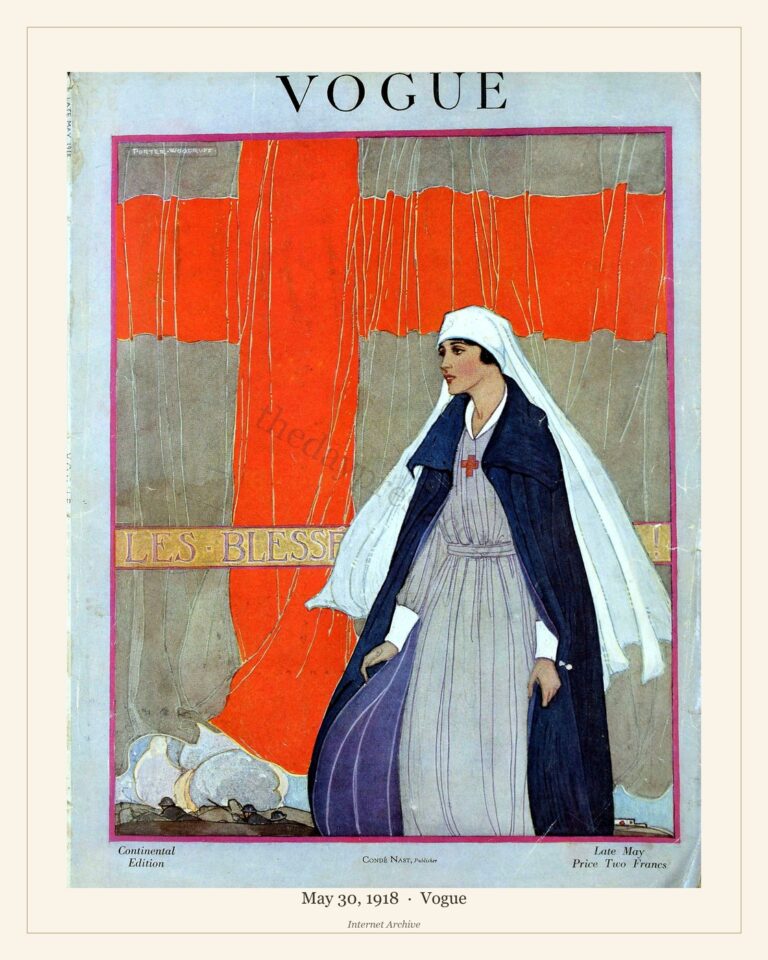
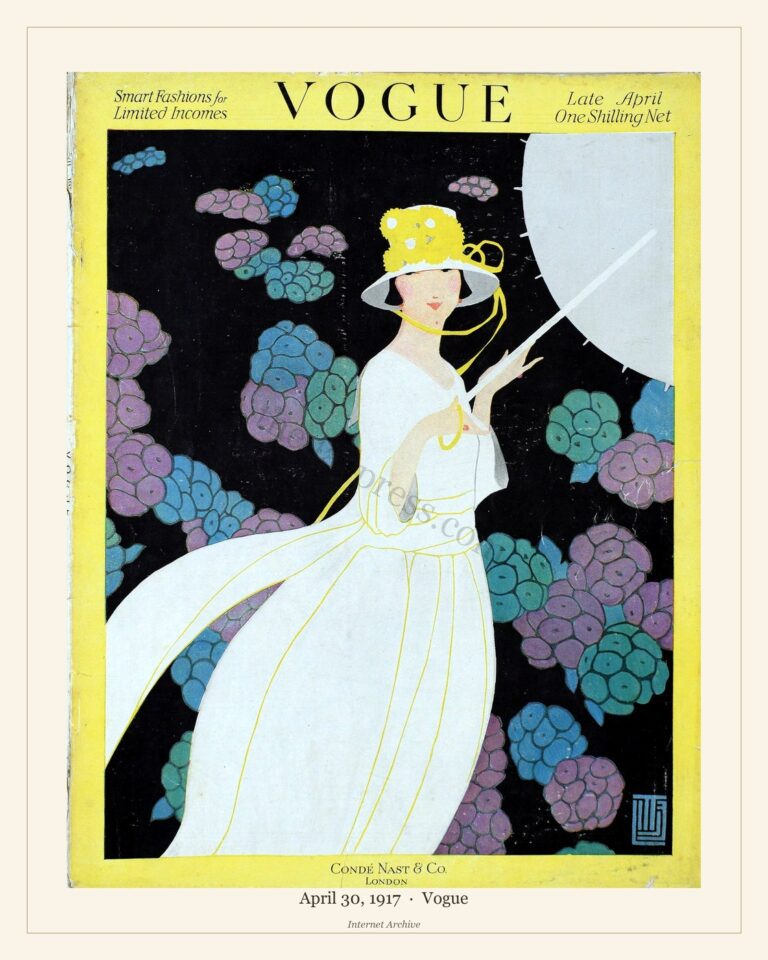
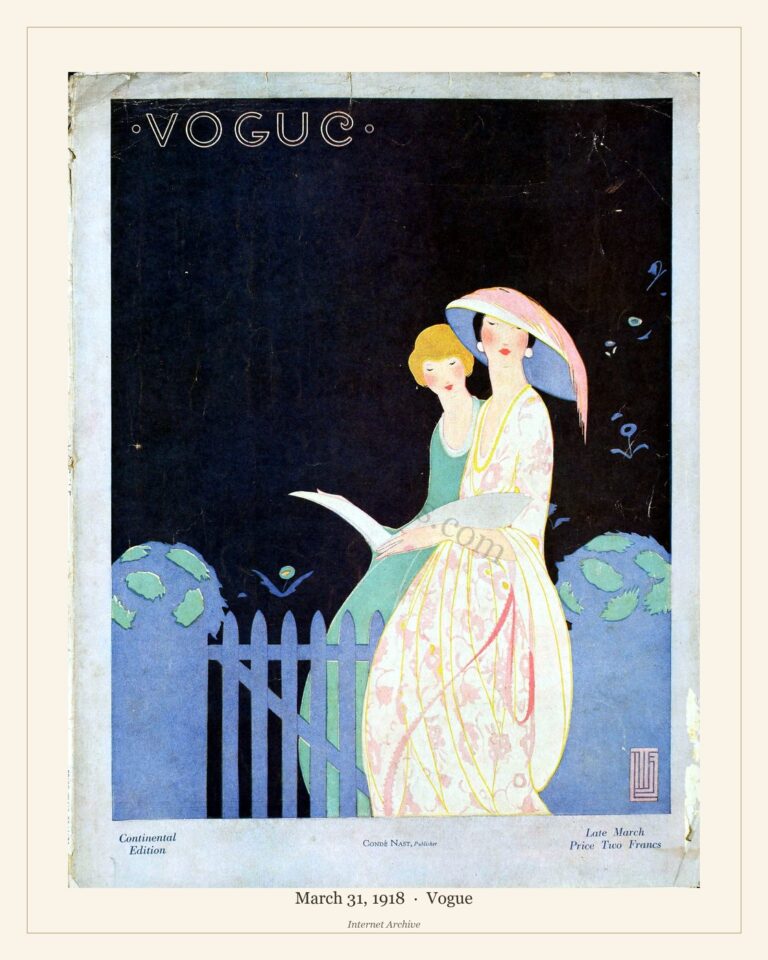
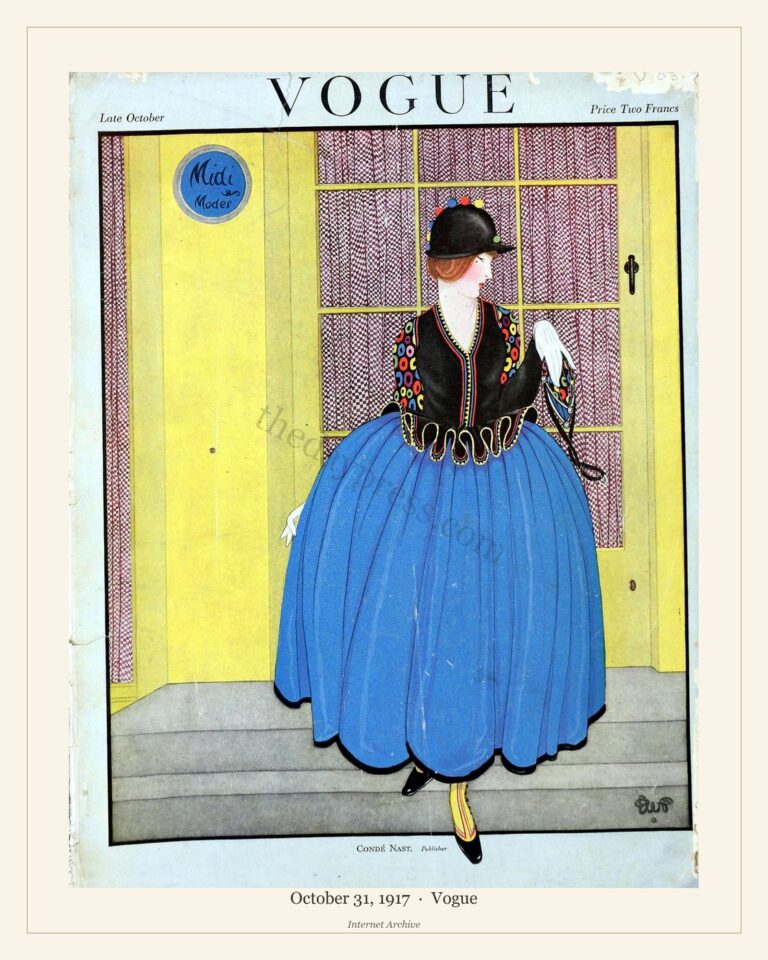
The original Life covers in our archive come from exactly the decades when the Gibson Girl reigned, each dated to the real issue it appeared on. Browse the Life covers →
Frequently asked questions
Who was the model for the Gibson Girl?
There was no single model. The Gibson Girl was an idealised type Charles Dana Gibson drew repeatedly. Real women associated with individual drawings include his wife, Irene Langhorne, and the young Evelyn Nesbit, but the figure deliberately belonged to no one face.
Is this the same Life as the photo magazine?
No. The Gibson Girl appeared in the original Life, a satirical weekly founded in 1883. Henry Luce bought only the name in 1936 for his new picture magazine; the two publications are otherwise unrelated.
What replaced the Gibson Girl?
The flapper of the 1920s, drawn most memorably by John Held Jr. The looser, bobbed, boyish silhouette of the Jazz Age made the corseted Edwardian Gibson Girl look dated almost overnight after the First World War.
Why is the Gibson Girl historically important?
She is generally regarded as the first mass-media visual ideal of American womanhood — the start of the ‘cover girl’ tradition — and a case study in how illustration both reflected and contained the era’s ‘New Woman’.
Further reading
- Browse Life covers
- Browse magazine cover art
- Carolyn Kitch, The Girl on the Magazine Cover: The Origins of Visual Stereotypes in American Mass Media (University of North Carolina Press, 2001).
- Susan E. Meyer, America’s Great Illustrators (Abrams, 1978).
The Day Press curates, restores, and reformats public-domain American printed images from 1885 to 1928 for archival-quality home printing. Browse the archive · Browse by theme, month, decade.