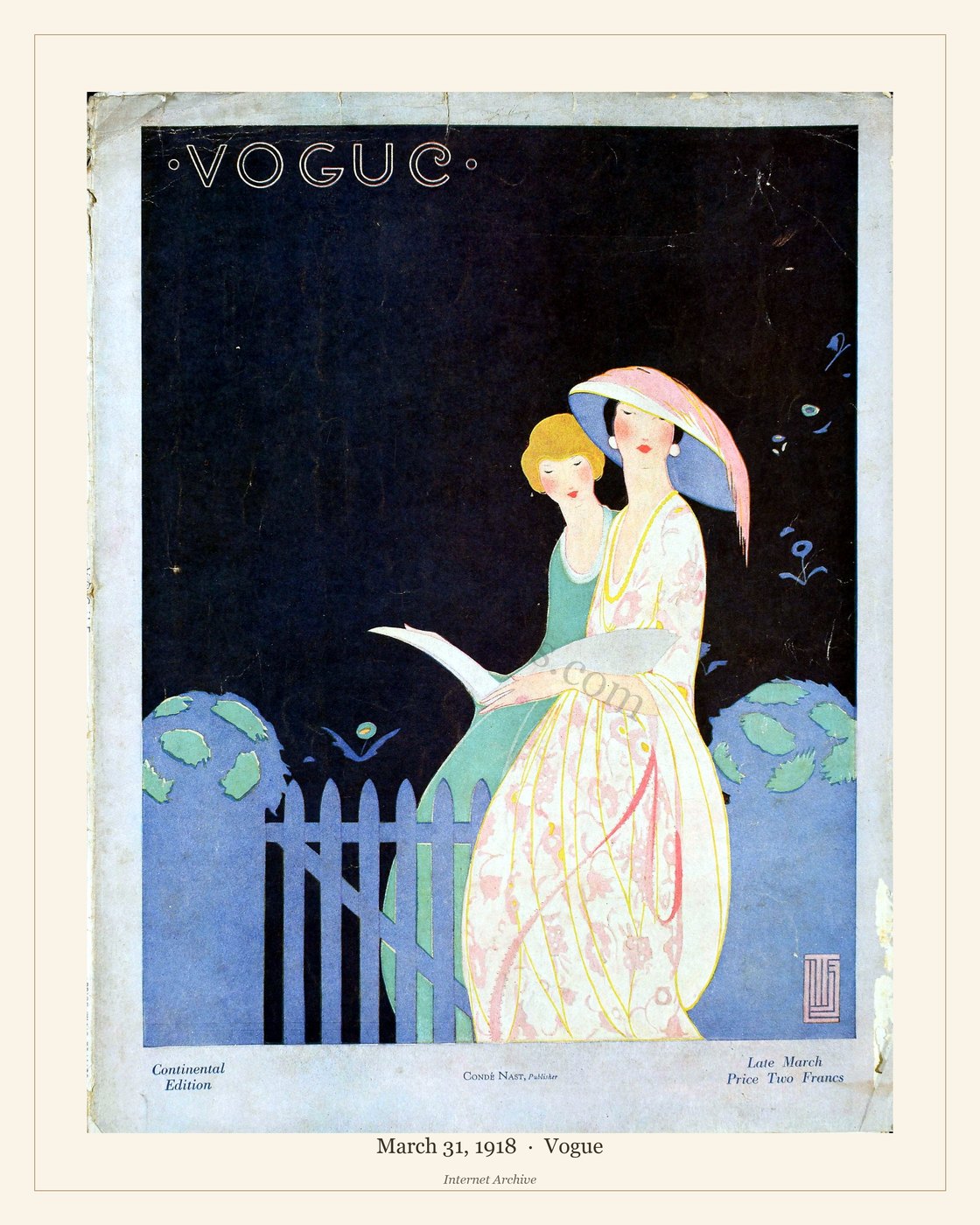
In focus: Vogue — March 31, 1918
TL;DR — The Vogue issue dated March 31, 1918 is a spring number from the last year of the First World War. Its date is a good occasion to look closely at one of the artists who defined Vogue’s illustrated cover: Helen Dryden, for a time among the highest-paid women artists in America, who drew Vogue covers through the 1910s before a striking second career in industrial design. This piece profiles Dryden, situates her among Vogue’s cover artists, and places the issue in the spring of 1918.
By The Day Press · Published July 2026
Helen Dryden, Vogue cover artist
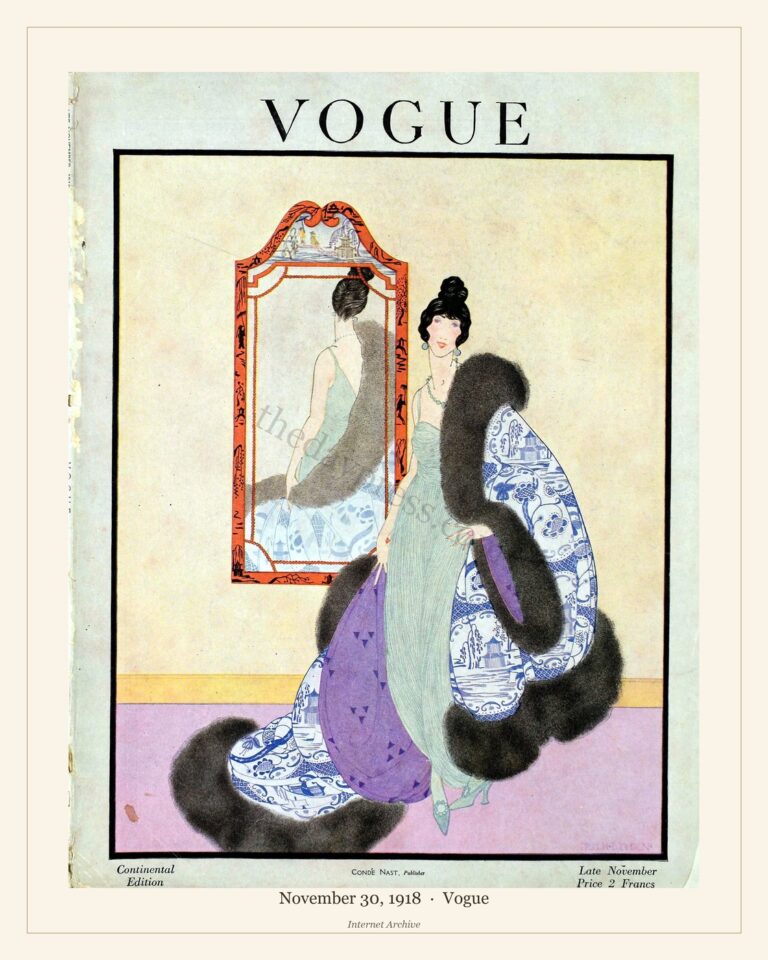
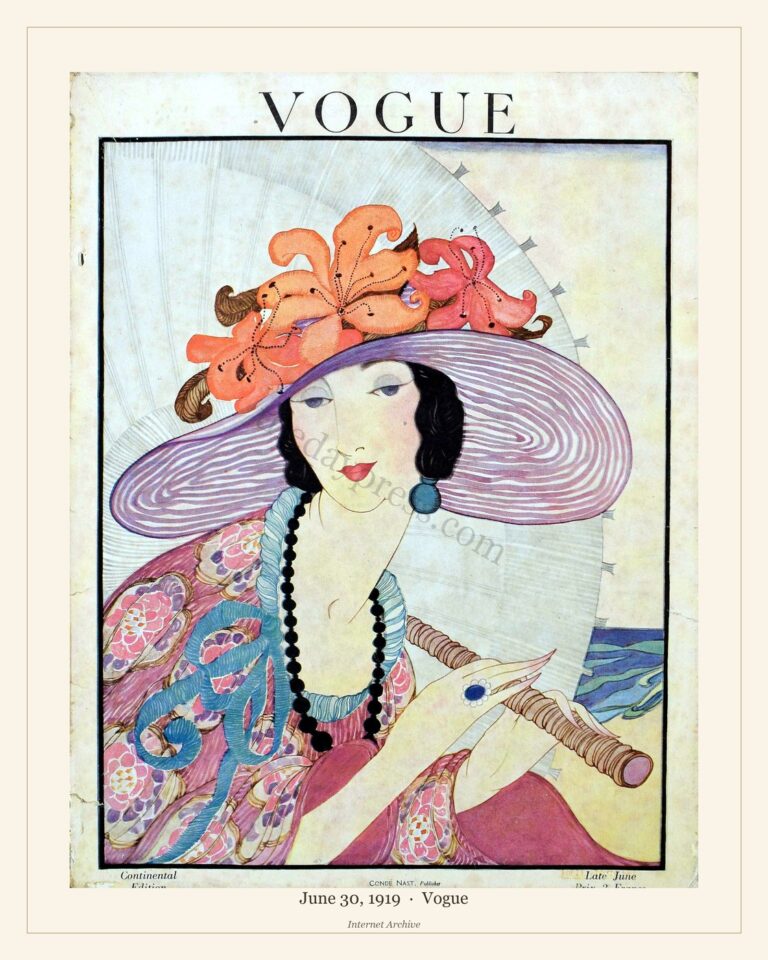
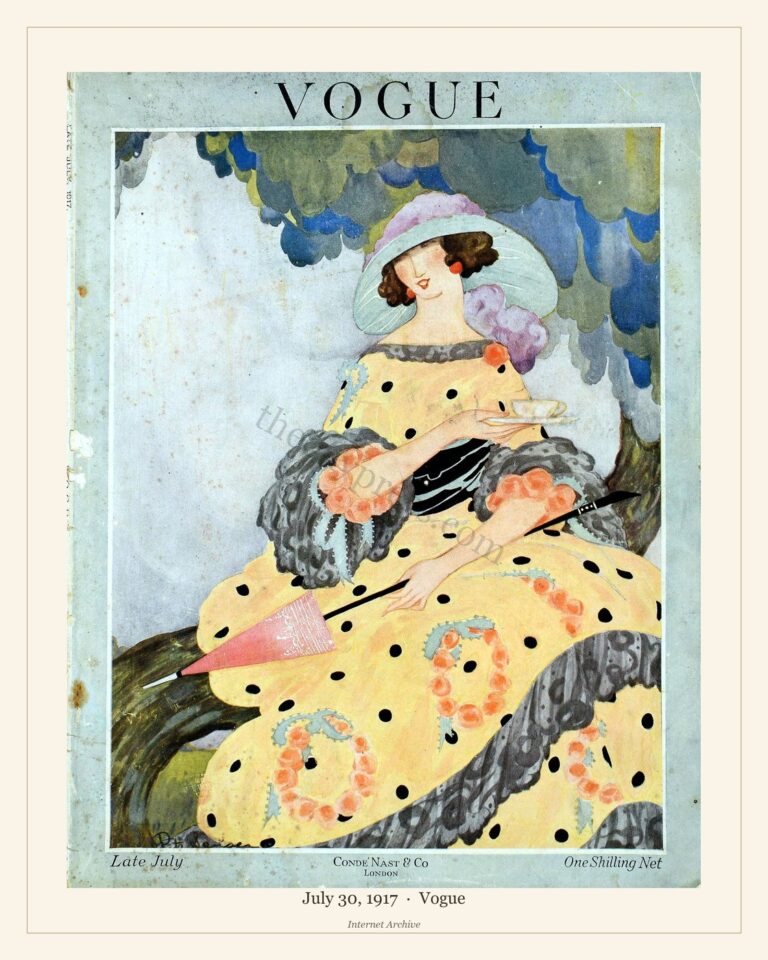
Helen Dryden (1882–1981) was one of the artists who gave Vogue its visual identity in the 1910s. Largely self-taught, she began contributing covers not long after Condé Nast took over the magazine, and through roughly 1909 to 1922 she produced a large body of Vogue covers in a fluid, decorative style — elegant figures, flowing line, a strong sense of pattern and colour.
At the height of her career she was reported to be among the best-paid women artists in the United States, a measure of how much a magazine’s identity could rest on a cover illustrator’s hand. Her work sits alongside that of George Wolfe Plank, Georges Lepape, and, a little later, Eduardo Benito — the small group whose drawings are what people mean when they speak of the classic illustrated Vogue.
A second life in industrial design
Dryden’s later career is one of the more remarkable turns in American design. After her magazine-illustration years she moved into industrial and product design — a field almost entirely closed to women at the time — and worked on consumer products and, most notably, on automobile interior and body styling for Studebaker in the 1930s. That an artist known for Vogue covers went on to shape the look of mass-produced cars says something about the breadth of the era’s commercial-art world and about Dryden’s own range.
Her trajectory — from self-taught illustrator to highly-paid cover artist to industrial designer — is a reminder that the magazine cover was not a backwater but a training ground for some of the most capable designers of the age.
Spring 1918: fashion under the last offensive
The issue is dated to the spring of 1918, a tense moment in the war. In March 1918 Germany launched its great Spring Offensive on the Western Front, the last major German push before the Allied counter-offensives that would end the war in November. Vogue kept to its seasonal calendar throughout — the spring number still appeared — while its editorial content continued to fold in wartime thrift and simpler dress.
As always, the cover is best read as an idea of spring rather than a record of a garment: a designed image meant to carry the season and the magazine, not to document a specific dress.
Illustration: a rare career open to women
Dryden’s success was not an isolated case. Around the turn of the century, commercial illustration was one of the few well-paid creative professions genuinely open to American women, and several became stars: Rose O’Neill grew wealthy on her Kewpie characters, Jessie Willcox Smith drew tender covers of children for years, and Elizabeth Shippen Green and, a little later, Neysa McMein were household names in the trade.
The reasons were practical. Illustration could be done at home, was paid by the piece, and was judged on the finished work rather than on the connections and studio access that gatekept the fine-art world. One consequence, easy to overlook, is that the idealised women on so many magazine covers of this era were frequently drawn by women — the image of American womanhood was, in part, shaped by female hands.
A dated cover from the illustrated era
Vogue’s drawn covers form a finite set, roughly 1909 to 1931, closed by the photographic cover of 1932. Dated to spring 1918, this one belongs to Helen Dryden’s active years as a Vogue cover artist — the period when a handful of illustrators, hers among them, gave the magazine its enduring look.
The Vogue covers in our archive come from the illustrated era of Dryden and her peers, each dated to the real issue it appeared on. Browse the Vogue covers →
Frequently asked questions
Who was Helen Dryden?
An American artist (1882–1981) who drew many Vogue covers through the 1910s and was, at her peak, among the highest-paid women artists in the United States. She later worked in industrial design, including automobile styling for Studebaker.
Did a woman really design cars after illustrating Vogue?
Yes. Helen Dryden moved from magazine illustration into industrial and automotive design in the 1930s — an unusual path, especially for a woman at the time.
Who were the other main Vogue cover artists?
George Wolfe Plank, Georges Lepape, and Eduardo Benito, among others, alongside Dryden.
Is the cover a drawing?
Yes — every Vogue cover from 1909 to 1932 was illustrated, not photographed.
Further reading
- Browse Vogue covers
- Browse magazine cover art
- Carolyn Kitch, The Girl on the Magazine Cover: The Origins of Visual Stereotypes in American Mass Media (University of North Carolina Press, 2001).
- Norberto Angeletti and Alberto Oliva, In Vogue: The Illustrated History of the World’s Most Famous Fashion Magazine (Rizzoli, 2006).
The Day Press curates, restores, and reformats public-domain American printed images from 1885 to 1928 for archival-quality home printing. Browse the archive · Browse by theme, month, decade.